

IP Mesh vs Traditional Wireless Network: What’s the Difference?
2025-10-28


Our astronauts, Zhai Zhigang, Wang Yaping and Ye Guangfu, have been residing in the Tianhe core module for nearly a month. The work and living conditions of the three of them need to be reported to the ground in real time, and sometimes they also need to communicate with the ground command...
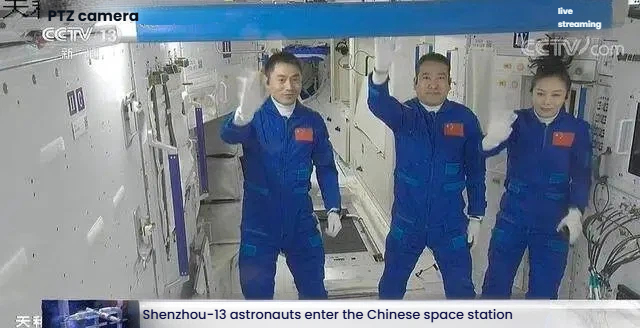

In fact, our space station is located at an altitude of 400 kilometers above the Earth and is constantly orbiting the Earth. It does not always remain directly above our heads. Sometimes it runs on the opposite side of the Earth. If direct communication is conducted, the signal may sometimes be blocked by the Earth and not received. Therefore, their communication with the ground also requires advanced communication technology. How is this achieved?
Previously, China's Tiangong-1 and Tiangong-2 and other spacecraft relied on ground receiving stations distributed all over the Earth to receive signals. For instance, China's Yuanting survey ship and some ground receiving stations located in Argentina, Australia, Africa, and Asia were used for this purpose. However, as the operating positions of the spacecraft changed, these receiving stations needed to continuously perform capture monitoring, which was rather troublesome. Therefore, China launched several communication relay satellites to improve the communication mode.
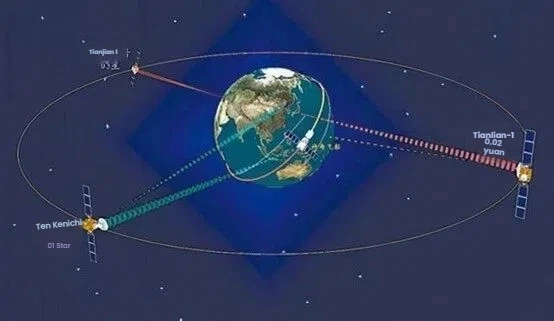
Currently, the communication between the space station and the ground station is assisted by the Tianlian relay satellites. It is not a direct dialogue between the space station and the ground. At an altitude of approximately 40,000 kilometers above the ground, our Tianlian-1 03 and 04 satellites and Tianlian-2 01 satellite are always on standby there. They are all high-speed, large-channel, high-capacity communication satellites. Once a signal is received, it is processed and sent back to the ground. Their function is equivalent to a communication base station on the ground, constantly forwarding the received signals to the required places. This "space base station" connects the communication between the core module of the space station and the ground station. It can provide video, voice, file transmission and email services, and some scientific experiment data is also received by the ground through such means.
So can the astronauts have private conversations with their family members? Yes, they can! There are also dedicated point-to-point phone lines in the space station communication system. When the astronauts talk privately to their loved ones, no one else, including the ground control personnel, can hear them.
The downlink rate of the signals transmitted by the Tianlian satellites is 1.2G, which is comparable to the 5G communication rate on the ground. Therefore, it can also be said that the channel capacity of these satellites is quite large. After the ground station receives the data from space, it will be transmitted to the Beijing Flight Control Center or sent to other places. Although the transmission of these signals is carried out at the speed of light, the Tianlian satellites are located at a considerable height above the ground. The distance the signals travel is nearly 100,000 kilometers. Additionally, there is processing and reception time involved. Therefore, there will be some delay in the communication, but the delay is not long. Friends who watch the live broadcast on CCTV will notice that the delay should be around one second.
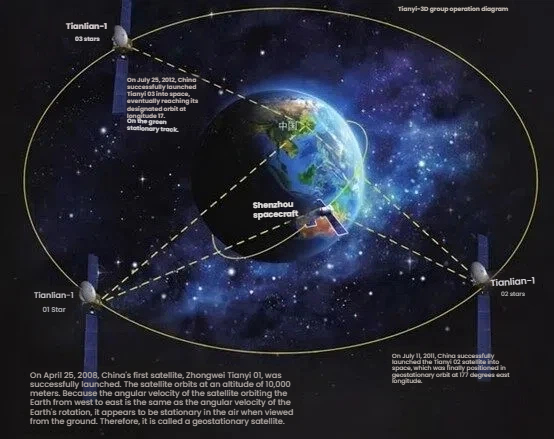
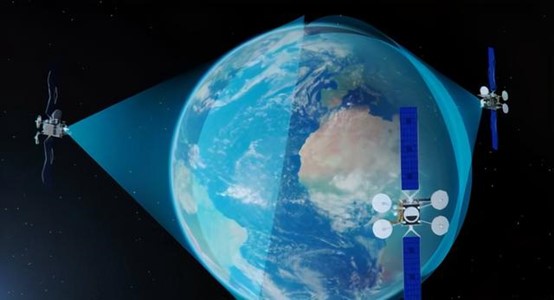
The signal transmission is handled by the Tianlian relay satellites. The communication between the space station and the ground will rarely experience signal interruptions, which has significantly improved since the time of Tiangong-1 and Tiangong-2. This is because the three Tianlian relay satellites operate at a high altitude, and each satellite's position can cover half of the Earth. Therefore, the relay satellites at different locations basically cover the entire surface of the Earth. The relay antenna of the core module of the space station can easily capture the signals.
Next, two more experimental modules will be launched and docked with the space station for in-orbit operation. These modules also carry relay antennas. As a result, the space station's signal reception and transmission capabilities will not be blocked by the station itself, and the coverage rate of monitoring and control can approach 100%. The communication between the earth and the space station will be faster and more reliable.