

What is meant by lightning protection grade?
2025-11-08


Starting from the third quarter of 2019, major manufacturers began to enter the WiFi 6 market. At the beginning of last year, the COVID-19 pandemic hit, and the market situation improved in the second half of the year. However, it was faced with a global shortage of chips. It can be said that the development of the WiFi 6 market was quite bumpy. Nevertheless, due to the unique product characteristics of WiFi 6, such as high speed, intelligence, and high concurrency, it has gained popularity in new application scenarios like big data, artificial intelligence, and the Internet of Things.
According to the "Quarterly Tracking Report on China's WLAN Market, 2020 Fourth Quarter" released by IDC in March, in 2020, the overall scale of the WLAN market reached 870 million US dollars. Among them, WiFi 6 performed well in 2020, with a scale of 270 million US dollars, accounting for 31.2% of the overall WLAN market.
Although it seems that the adoption of WiFi 6 is progressing well, it is believed that there are still many people who have not yet used WiFi 6 devices. This is because many people either do not have smart terminals that support WiFi 6, or do not have WiFi 6 routers.
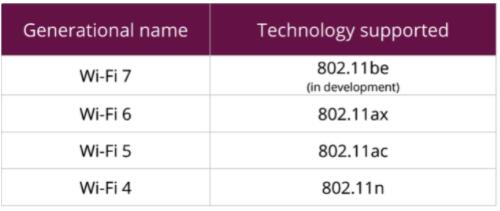
Figure 1 WIFI Naming Rules
Even so, the next-generation WiFi technology has already begun to be developed, with a speed of up to 30 Gbps. It is known that Qualcomm, Broadcom and MediaTek have all started the development of WiFi 7-related technologies. However, WiFi 7 is unlikely to be put into use so soon. Qualcomm predicts that the launch of this technology will take at least 2 to 3 years.
According to a previous report released by Intel, the WiFi 7 standard working group was established in 2018, and the construction of the indicators and framework work documents began in May 2019. As per the plan, the first draft version should be completed in May this year. However, so far, no new draft content has been found on the official website of the WiFi Alliance and the IEEE. It is estimated that the release has been delayed.
According to the original timeline, a test version of the chip will be released in 2021, and the WiFi 7 standard will be officially launched in 2024. Its main application scenarios will include AR/VR, 4K and 8K video streaming, remote work, cloud computing, video calls and remote meetings, etc.
The new features of WiFi 7
According to the definition of the WiFi Alliance, WiFi 7 actually refers to 802.11be, which is developed based on the 802.11ax standard. Compared with 802.11ax, 802.11be will have the following improvements:
MIMO enhancement; speed up to 30 Gbps; capable of working on three frequencies simultaneously; higher modulation; lower latency, etc.
MIMO Enhancement
Compared with WiFi 6's multi-user multi-output (MU-MIMO) technology that enables 8 data streams to work simultaneously, WiFi 7 will be upgraded to support the highest (Tx: 16, Rx: 16) data streams, significantly enhancing the wireless bandwidth and client data support. At the same time, a more advanced CMU-MIMO has been introduced. Here, C stands for Coordinated, meaning that the 16 data streams do not have to be provided by a single access point but can be simultaneously offered by multiple wireless routers. This is precisely suitable for the recently popular Mesh WiFi networks, allowing terminals to connect to multiple Mesh wireless routers simultaneously. That is to say, in the future WiFi 7 era, the number of antennas will increase even more.
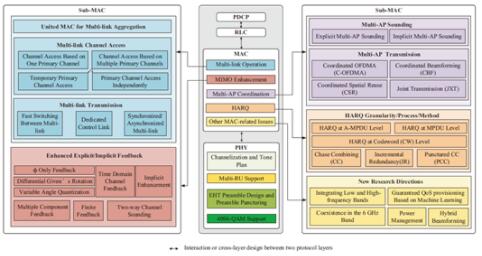
Figure 2: Overview of the technologies to be used in WiFi 7. (Source: IEEE 802.11be – Wi-Fi 7: New Challenges and Opportunities)
New 6GHz spectrum, with three frequencies operating simultaneously
The WiFi 6 standard utilizes two frequency bands: 2.4GHz and 5GHz. Recently, the upgraded WiFi 6E introduced a new 6GHz spectrum. WiFi 7 will continue to use the three frequency bands: 2.4GHz, 5GHz, and 6GHz, and will enhance the collaborative use of these three bands to achieve a larger bandwidth. Additionally, the bandwidth of WiFi 7 will be expanded from the previous 160MHz to 320MHz.
Wi-Fi 7 will also support 160+160MHz, 240+180MHz and 160+80MHz channels to combine non-contiguous spectrum blocks, which means it can provide higher-quality network connections.
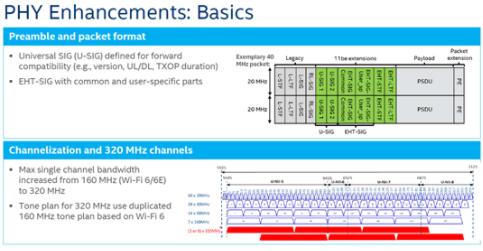
Figure 3 shows that the bandwidth of WiFi 7 has been expanded to 320 MHz.
Upgrade to 4096-QAM
In wireless technology, signal modulation is extremely important. The WiFi 6 standard employs 1024-QAM modulation technology, while WiFi 7 is expected to upgrade the modulation method and directly use 4096-QAM. This will expand the data transmission capacity and ultimately achieve a theoretical speed of 46.1 Gbps, which is 4.8 times that of the current WiFi 6 speed of 9.6 Gbps.
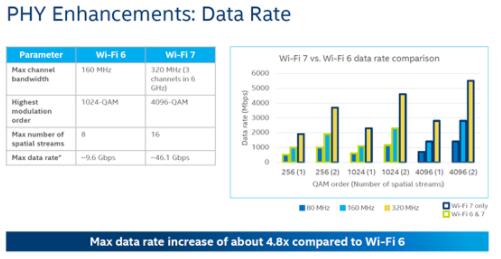
Figure 4 Upgrade to 4096-QAM
Multi-AP Collaboration Optimization
Multi-AP coordination (multi-AP collaborative optimization) might be a key feature in Wi-Fi 7. Regarding the issue of multi-AP collaboration. Currently, in the 802.11 working mode, APs actually do not collaborate with each other. The some manufacturer-defined collaborations merely optimize the selection of channels to avoid conflicts between APs.
The greatest advantage brought by AP collaboration is the distributed MIMO formed by multiple APs. Two different APs can provide MIMO transmission functionality for a single node, which can significantly enhance the efficiency of spatial multiplexing.

Figure 5 Multi-AP Collaboration Optimization
However, in this technology, the communication channel for collaboration between APs needs to be carefully designed. Currently, the way APs collaborate is through the CAPWAP tunnel, where they are connected wirelessly to the WLC for further collaboration. However, this method requires that each AP be connected wirelessly to a common controller. However, if this is done, then the use of WiFi 7 requires multiple WiFi 7 routers to be used in order for the effect to take place. Therefore, whether it is possible to achieve AP communication through wireless means, and thereby enable distributed MIMO collaboration, is a key design content in WiFi 7.
Lower latency
By introducing technologies such as multi-link operation (MLO), multi-AP coordination, and 320 MHz bandwidth channels, the latency of WiFi 7 can be significantly reduced and its reliability can be improved.
Among them, multi-link operation (MLO) enables the device to simultaneously transmit and receive across different frequency bands and channels. WiFi 7 can enhance these links by increasing throughput, which is the measured data between devices in the local area network (LAN). MLO will also reduce latency and improve reliability.
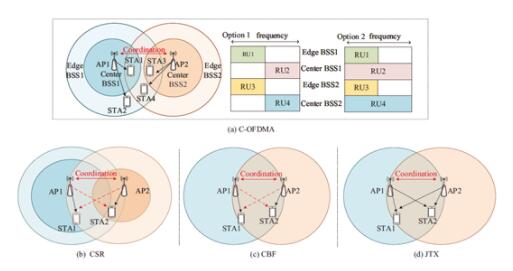
Figure 6 Results in lower latency
WiFi sensing function
WiFi 7 is quite different from its previous generations. It will introduce WiFi sensing functionality. It is reported that with WiFi 7, it is possible to detect people's movement in different rooms without the use of any sensors.
According to IEEE President Paul Nikolich, this technology is also highly sensitive and can even detect the user's breathing rate. "Because when they breathe, it alters the radio frequency characteristics and channel characteristics."
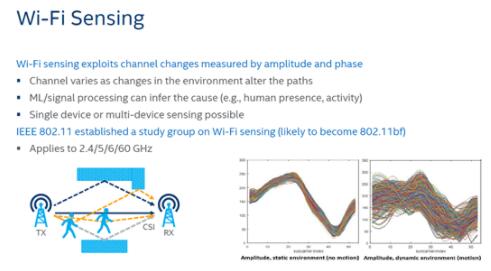
Figure 7 Introduction to WiFi 7 Sensing Characteristics
We can envision that this technology can be applied in various scenarios, such as security and environmental controllers within enterprises, the activation and deactivation of room lights, gesture control, health monitoring for infants or the elderly, and so on. If it is actually implemented, the potential for imagination will be extremely vast.
For instance, such a system can be used to automatically unlock doors. When you return home, the home internet will detect your presence and combine this data with the signals sent by the devices or camera system you are wearing, and it will automatically unlock the door lock as you walk upstairs.
However, all these are still in the planning stage. Whether they will be adopted ultimately depends on discussions and research conducted by the members of the WiFi Alliance and IEEE. Additionally, IEEE emphasizes that they will ensure that the new features of WiFi will be strongly protected, including personal privacy, and that complex Wi-Fi networks will not be vulnerable to attacks. IEEE has assigned a dedicated team to address the privacy issues of the new WiFi standards.