

IP Mesh vs Traditional Wireless Network: What’s the Difference?
2025-10-28


What are the features of the video surveillance system with wireless bridge in the application scenario?
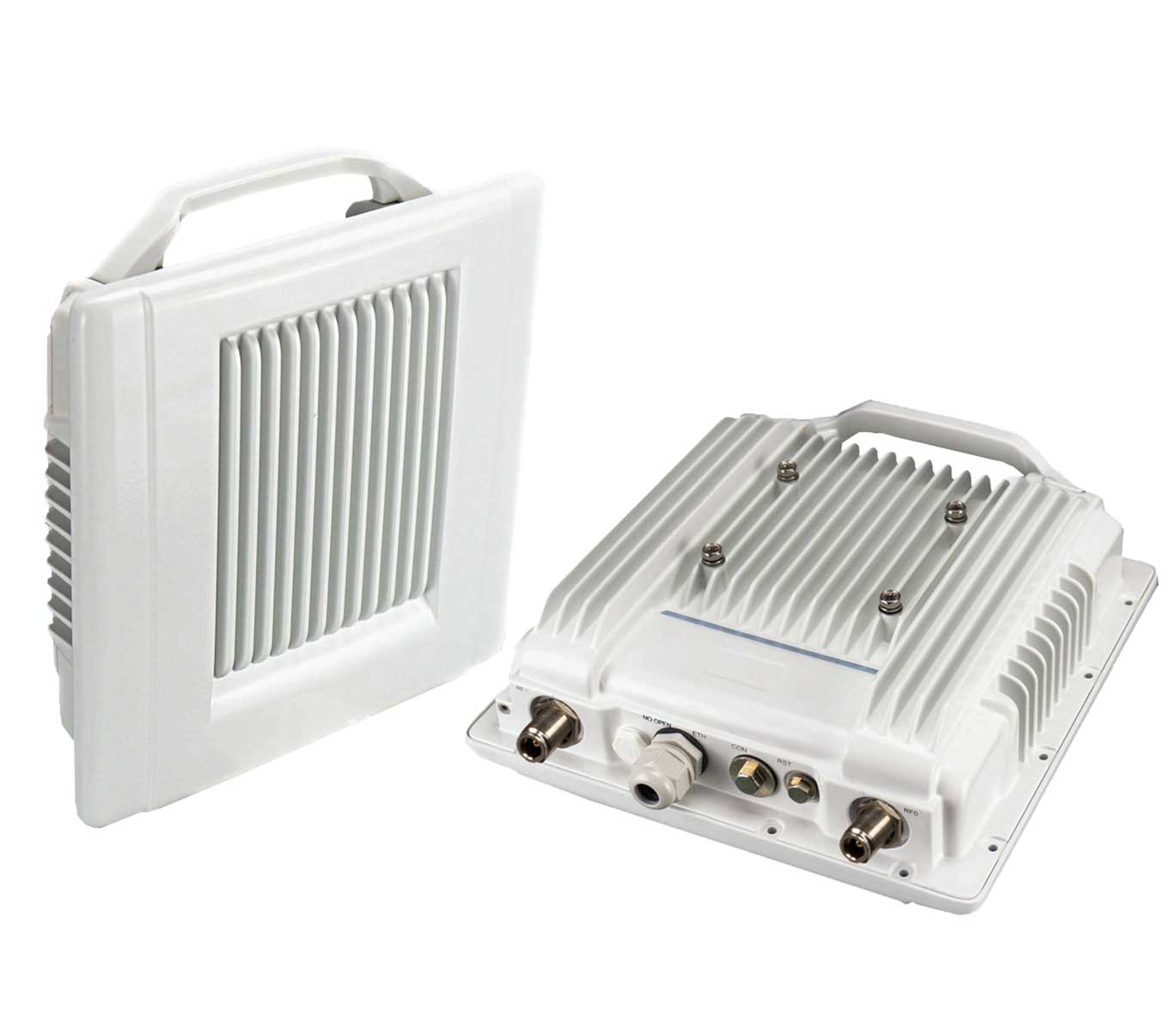
Wireless bridges are the same as wireless network APs. They are all types of wireless transmission devices. The difference is that wireless network APs are used for wireless coverage (WiFi), while wireless bridges are used for video surveillance systems (wireless surveillance). Below, by the product and service provider Wacai Communication, we will elaborate on the application scenarios and related knowledge of wireless bridges in video surveillance systems.
I. What is a Wireless Bridge
A wireless bridge refers to the equipment that connects Wi-Fi networks. It uses wireless data transmission methods to establish communication highways between two or several networks, enabling data transmission from one network to another.
In wireless monitoring, the wireless bridge acts as the internet highway bridge for transmitting wireless monitoring video signals. It is like this suspended and folded invisible network cable, thereby eliminating the need for each section of wiring (network cables), making the construction process much simpler.
Wireless bridges cannot be used alone. They need to be paired or used in one-to-one mode. There must be a transmitting end and a receiving end, and detailed wireless network statistics must be transmitted in a timely manner.

II. Several Application Methods of Wireless Bridges in Wireless Monitoring
1. Peer-to-peer application
Point-to-point means that one transmission point is matched with one receiving point. That is to say, it is a 1-to-1 application of wireless bridges. These are very simple networking solutions. The wireless antennas of the two points must be placed relatively and precisely to achieve the best possible effect.
This method is suitable for situations where there are no obstacles, few obstacles, or the visibility distance is relatively close. During the transmission process, this method has the least loss and the best monitoring data transmission effect. If it is an analog camera, this method must be used.
2. Relay mode
It is this kind of indirect transmission method, where a wireless bridge must act as a "repeater". It is usually used for wireless data transmission between two buildings that cannot be directly visible to each other, or for transmission through obstacles (indirectly bypassing the obstacles).
The data signal must be transmitted from point A to point B. However, there is a building (C) in the middle that blocks the path, and it is not possible to change to another alternative route. In this case, a wireless bridge can be installed in the building for the residents. The data signal from point A will first be sent to C, and then to B, which is equivalent to adding one more step in the middle.
Because in this method, there are inevitable losses in data signals and their transmission. Therefore, the relay mode should be used sparingly, or it can be applied in situations where the bandwidth requirement of the transmission network is not high and the distance is relatively short.
3. Point-to-multipoint application
This networking solution is widely used in wireless monitoring, and it must be applied when using network cameras. Several transmitting points need to be matched with one receiving point. For example, at the front end, there are several wireless bridges to transmit the monitoring data of several surveillance cameras, and then they are aggregated to the receiving wireless bridge to be uniformly transmitted to the monitoring system.
This method is applicable for monitoring. Special attention should be paid to the viewing angle between the two transmitting points should not be too large. Generally, it is best to keep it around 20 degrees. The transmission distance between the transmitting point end and the receiving end in the front-end development should not be too far. It is best to ensure that the transmission link is on the same line to ensure the reliability of the transmission picture quality. The clarity of the applied monitoring camera does not need to be very high.
When using the point-to-multipoint mode, several points should be noted: transmission interval, transmission network bandwidth, transmission security channel availability, etc. It might also be necessary to flexibly select bridge equipment based on the actual situation on site.
III. Application Environment of Wireless Bridge
Wireless bridges are generally used outdoors and are suitable for connecting two networks. A pair of wireless bridges, one serving as the transmitting end and the other as the receiving end, transmit data through the air.
When working on the new project of the monitoring device, the problem of not being able to install the hanging wires and wiring was avoided. If the monitoring area was not large, the monitoring equipment was relatively centralized, and the wiring was very simple, usually there would be no much difficulty in installing the monitoring device. However, if the total area of the monitoring device was large, the positioning points were scattered, and it was troublesome to install the hanging wires and wiring (such as in forests, water conservancy hubs, mines, etc.), installing the additional monitoring devices would be very troublesome. On the other hand, using wireless bridge to set up wireless monitoring would be much simpler.
When using wireless bridges outdoors, one must pay attention to issues such as the natural environment and wireless antennas. The greater the transmission power of the wireless antenna, the farther the transmission distance. Two 12dbi directional antennas can maintain a point-to-point microwave heating connection of 2km, and a 27dbi directional antenna can maintain a point-to-point microwave heating connection of 10km.
IV. Characteristics of the Monitoring System Based on Wireless Bridge
Wireless bridges have raised the level of wireless communication technology to a new level and are widely used in wireless monitoring projects. By using wireless bridges to create a wireless monitoring network, the deployment staff will be able to obtain a very flexible and user-friendly solution. Compared with traditional monitoring devices, wireless monitoring has advantages such as convenient project installation, no restrictions on wiring, and cost reduction, and is thus widely used.
1. High flexibility
Nowadays, intelligent security regulations require a video surveillance system without blind spots. Wireless surveillance is not limited by cables and has flexible scalability. It can easily add new surveillance equipment at any location at any time, and can also change the positions of old surveillance devices to enhance the systematic risk of the system, truly implementing the security surveillance system in practice.
2. Low cost
With just one project investment, the wiring cost is low. No need to hire professional construction teams, nor to dig or install conduits. Wireless monitoring can solve the constraints of cables. It has the advantages of short installation time, convenient maintenance, strong expansion capability, and quick cost recovery.
3. Short construction period and easy maintenance
The wealth monitoring system is thus limited by the terrain and office environment. The construction period is very long, and in some areas, the wiring project cannot be maintained. At present, the adoption of wireless monitoring can solve the constraints of cables in multiple aspects and facilitate the installation process.
4. Wide range of application
It can be applied to a wide range of industries with extensive coverage, including security prevention, traffic monitoring, industrial monitoring, home monitoring, etc. For example, wireless monitoring for ATMs, bank tellers, shopping malls, processing plants, etc., as well as remote control wireless monitoring services provided for care facilities, kindergartens, and universities.