

IP Mesh vs Traditional Wireless Network: What’s the Difference?
2025-10-28


Many friends have asked about wireless bridges several times. Today, people have gained a comprehensive understanding of the relevant knowledge about wireless bridges.
I. What is a Wireless Bridge
A wireless bridge, as the name suggests, is a bridge for wireless networks. It uses wireless transmission methods to establish a communication bridge between two or more networks. Wireless bridges are classified in terms of communication mechanisms into circuit-type bridges and data-type bridges. Wireless bridges are usually divided into two types: 2.4G and 5.8G. Other frequency bands must be applied for separately, and after obtaining authorization, they can be used.
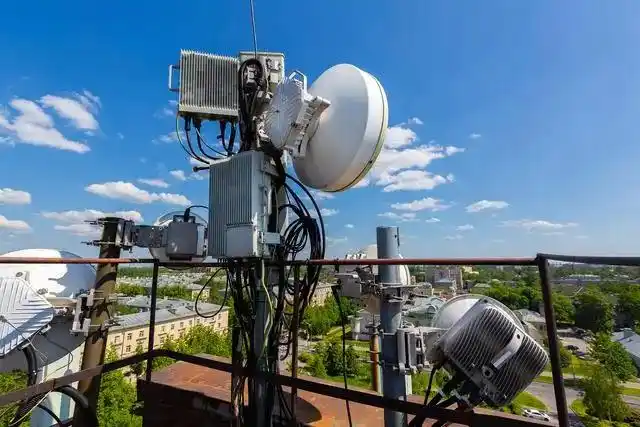
2.4G Bridge:
The advantages are low frequency, long wavelength, and strong diffraction ability. In simple terms, the transmission performance is good, and even if there is slight obstruction in the transmission path, it will not cause major problems. Another advantage is that the cost is relatively low. The disadvantage is that there are many machine devices using the 2.4G frequency band, and the radio wave data signals at the bridge transmission points are very susceptible to interference from the data signals emitted by other transmission points of the machine devices, resulting in a decrease in transmission quality. Moreover, due to the transmission network bandwidth of the 2.4GHz frequency band itself, it usually does not exceed 400Mbps.
5.8G Bridge:
The advantages are high frequency, relatively pure channel and large transmission bandwidth. The transmission bandwidth starts at 300 Mbps and can easily reach above 1 Gbps. It is suitable for scenarios where high data transmission requirements are specified. The disadvantage is high frequency, short signal wavelength, poor penetration, and no obstructions are allowed during transmission. The cost of 5.8G equipment is higher than that of 2.4G and is still in the promotion stage.
II. Working Principle of the Bridge
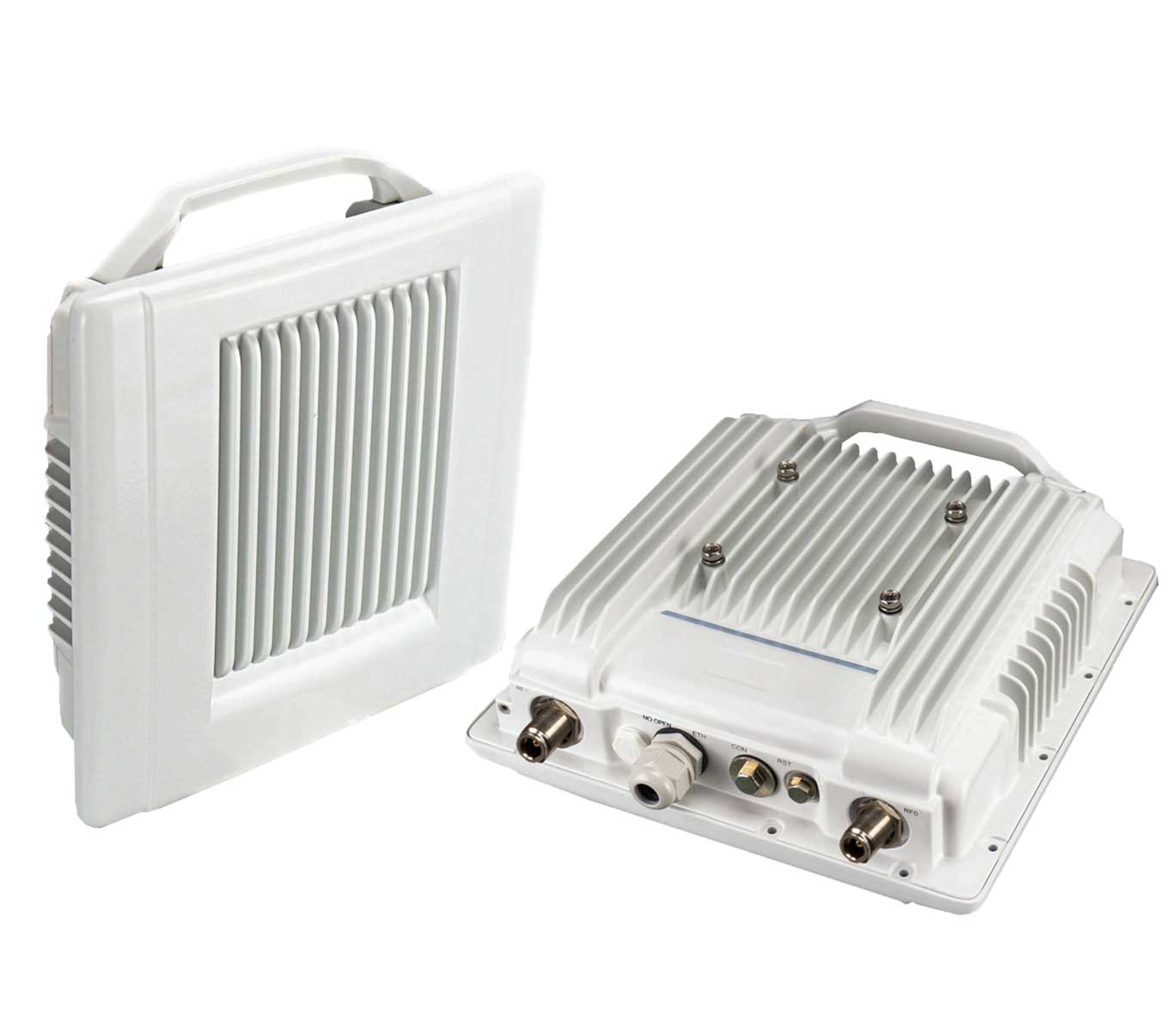
The wireless bridge transmission system usually consists of two or more wireless devices. Due to the bidirectional transmission of data, each device must have the ability to receive and transmit wireless signals. The working principle of a wireless bridge is that the bridge uses the air as a medium to transmit signals. In simple terms, one end of the bridge converts the signals in the network cable into wireless electromagnetic wave signals and emits them in a directed manner into the air. The other end of the bridge has the opposite effect. It receives the wireless electromagnetic wave signals in the air and converts them into wired signals. Wireless electromagnetic wave signals can propagate through the air as a transmission medium, which can solve many problems of difficult wired deployment construction: such as highway, river, mountain ravine obstructions, or road hardening, where wired deployment construction is difficult. The detailed installation steps for outdoor wireless APs are as follows. The wireless bridge networking has obvious advantages. It can achieve point-to-point or point-to-multipoint network connections over a distance of up to 50 kilometers, with a data transmission speed of up to 108 Mbps. It effectively solves the problem of network connectivity in the area. As long as it is within the coverage area of the wireless signal, the client can easily access the network, integrate the system, and does not require any wiring. Wireless terminals can achieve zero-configuration access. Therefore, it is very easy to perform network maintenance and expansion. Bridges are usually used in the following scenarios: wireless data collection, data transmission from monitors (outdoor and elevator carriages), outdoor wireless coverage, outdoor long-distance wireless bridging, personal ISP wireless broadband, statistics transmission of unattended monitoring stations, etc.
III. How to Select the Appropriate Bridge
Wireless bridge is a commonly used wireless monitoring transmission device in the field of wireless surveillance. Although it is also a wireless device like wireless AP and wireless router, it is not used to establish Wi-Fi coverage but to transmit video data wirelessly. Just like the network switch in surveillance equipment, the wireless bridge is a key transmission device in wireless surveillance and is applied in several major industries such as outdoor surveillance video transmission and elevator car surveillance video transmission. There are various types of wireless bridges available in the market, countless in number. How to choose a bridge that suits your needs? We will answer this for you from the following aspects.
1. Transmission distance
The transmission distances for the new wireless monitoring projects vary. The transmission distances of the wireless bridges also come in many different types. Some can transmit up to 1 to 3 kilometers, some 3 to 5 kilometers, some 5 to 10 kilometers, and some around 20 kilometers. It is necessary to determine based on the transmission distance of the monitor. Try to make the larger transmission distance of the bridge exceed the transmission distance of the monitor. Since the temperature conditions such as rain, fog, and snow in specific application scenarios can reduce the transmission characteristics of the bridge, construction projects should pre-embed sufficient capacity for these characteristics.
2. Transmission bandwidth
The transmission rates of wireless bridges vary, such as 150Mbps, 3000Mbps, 450Mbps, 600Mbps, 900Mbps, etc. The choice of which rate to use can be determined based on the requirements of wireless monitoring. What users actually need to consider is the transmission performance of the bridge at a specific distance, rather than the theoretical bandwidth data. For example, the basic theoretical transmission network bandwidth of the SF-5800AC bridge is 866Mbps. At a distance of 2 kilometers, the point-to-point communication network bandwidth evaluation reaches 400Mbps, and it can support 20 150W monitoring cameras without any working pressure.
3. Working frequency
The mainstream working frequencies of wireless bridges are two types: 2.4G and 5.8G. The characteristics of these two types of bridges are different. Generally speaking, the 2.6G wireless bridge is currently the popular frequency band, with good compatibility mode and good diffraction working ability, but its anti-interference ability is relatively poor. Especially in urban areas, it is prone to interference from the network signals emitted by other WiFi devices. The 5.8G channel is relatively pure, has better anti-interference ability, and has a long transmission distance. However, its diffraction ability is poor. For urban areas, busy areas, long-distance transmission, cameras with large stream data, and more 2.4G interference, choose the 5.8G wireless bridge. For others, such as shorter transmission distance, more remote locations, less co-frequency interference, etc., use the 2.4G wireless bridge.
4. Antenna
The antenna is an essential component of a wireless bridge, used for transmitting and receiving wireless signals. Without an antenna, a wireless bridge cannot achieve communication. There are many types of antennas, including omnidirectional antennas and directional antennas. Omnidirectional antennas are used for close-range coverage and transmission, while long-distance bridging should select directional antennas. Moreover, the greater the antenna gain, the better the characteristics of the wireless bridge.
5. Power supply mode
The working environment of wireless bridges usually involves some complex outdoor conditions, such as forests, ports, tunnels, reservoirs, etc. Therefore, power supply is a rather troublesome issue. Selecting a wireless bridge with an applicable POE network cable power supply system can very well handle this difficulty. The bridge is equipped with all applicable POE injectors for power supply, and the power supply system has a distance of up to 65 meters.
6. Level of protection
Wireless bridge devices are mostly used outdoors and the natural environment is highly variable, including rainy days, snowy weather, high temperatures, etc. They must be able to resist moisture, dirt, high temperatures, and cold. For a qualified wireless bridge, these "qualities" are essential.
7. Pairing mode
Currently, the mainstream pairing methods for network bridges include three types: button pairing, code dialing pairing, and automatic pairing. In terms of the simplicity of engineering applications, especially for projects involving the one-time installation of dozens or even hundreds of network bridges, automatic pairing is undoubtedly the best choice. When the network bridges are in the original factory condition, they can be plugged in and automatically matched fully, greatly reducing the workload.