

What is meant by lightning protection grade?
2025-11-08


In modern wireless communication technology, the 5GHz high-speed wireless bridge has become one of the important solutions for long-distance network connections. It enables wireless network interconnection between two locations without laying cables, and is commonly used in enterprise campuses, factories, schools, surveillance systems, and temporary network deployments. This article introduces the basic concepts, working principles, long-distance transmission capabilities, installation methods, and practical applications to help beginners build a fundamental understanding.
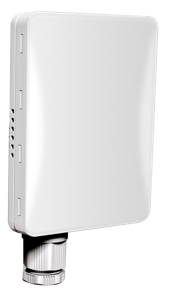
A 5GHz high-speed wireless bridge is a device that uses the 5GHz frequency band to establish a dedicated wireless network connection between two or more locations. Its main function is to replace long-distance wired networks and achieve wireless extension of network signals.
Main features include:
High transmission rate, supporting from 100Mbps to Gigabit networks
Relatively less interference compared to lower frequency band wireless networks
Suitable for medium to long-distance network connections
Can be used for video surveillance, data backhaul, and other scenarios
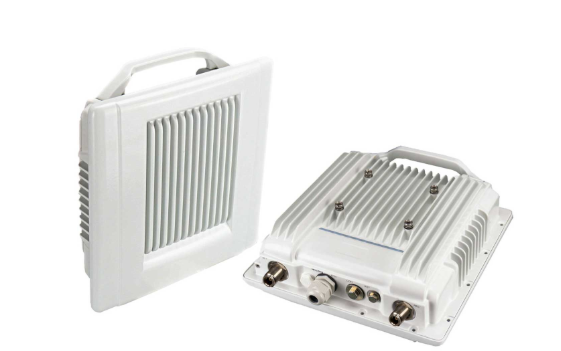
The long-distance performance of a wireless bridge generally depends on the following factors:
Presence of an unobstructed line of sight (critical)
Antenna type and gain
Installation height and alignment accuracy
Surrounding wireless interference conditions
Weather and environmental conditions
In practical engineering applications, long-distance stability needs to be verified through on-site testing. Performance varies significantly in different scenarios, so it is usually not possible to describe it with a single fixed value.
Use Directional High-Gain Antennas
Directional antennas can concentrate signal energy, improving long-distance transmission stability and effective coverage.
Reduce Wireless Interference
Try to avoid areas with dense wireless signals, such as:
Dense enterprise wireless network areas
Areas with many industrial wireless devices
Multi-channel wireless surveillance system environments
Maintain Good Line of Sight
This is one of the most critical factors affecting performance. Trees, buildings, power lines, etc., can cause signal attenuation or even connection loss.
Choose the Installation Position Wisely
In actual projects, devices are usually installed at higher positions, such as rooftops or dedicated mounts, to ensure wireless link quality as much as possible.
Enterprise Network Interconnection
Used to connect LANs between different buildings, enabling unified network management and data access.
Video Surveillance Systems
Used for wireless backhaul of surveillance camera data, reducing cabling costs.
Temporary Network Deployment
Suitable for construction sites, event venues, and other environments where networks need to be set up quickly.
Areas Difficult to Wire
Used in mountainous areas, rural regions, or complex terrains as an alternative to some wired network construction.
Military-grade precision manufacturing: From material selection to assembly, all processes are controlled to military standards, ensuring stable operation in harsh environments such as high temperature, high humidity, and strong winds.
Backed by measured data: Each bridge undergoes long-distance line-of-sight and non-line-of-sight tests before leaving the factory, with actual transmission curve reports provided.
Flexible customization: Supports customization of antenna gain, frequency points, interfaces, etc., according to project requirements, adapting to complex scenarios such as industrial parks, forests, and coastlines.
One-stop supporting solutions: Can be paired with tqwifi's solar-wind hybrid power supply system, anti-interference mounting brackets, and lightning protection kits to solve field power supply and protection challenges.
Looking for reliable 5GHz equipment for your long-distance networking project?
Contact the tqwifi technical team for professional support.
The 5GHz high-speed wireless bridge is a practical device solution for medium to long-distance wireless network connections. It achieves stable data communication under certain conditions through directional wireless transmission and is suitable for various network extension scenarios.
Its actual performance is highly dependent on the on-site environment, including line-of-sight conditions, installation methods, and device performance. Therefore, field testing is usually required in engineering applications to determine final performance.
Q1: What is the longest transmission distance of a 5GHz high-speed wireless bridge?
A1: The actual distance depends on device performance and environmental conditions. Under an unobstructed line of sight, it can range from several hundred meters to several kilometers, with significant differences between products.
Q2: Does weather affect transmission?
A2: Yes, to some extent. Rain, fog, or strong winds may cause some attenuation of signal quality, but the impact level depends on the environment and device.
Q3: Is installation complicated?
A3: Overall, it is not complicated, but attention must be paid to alignment accuracy and installation position selection. Standard deployment steps can be followed to complete the installation.