

What is meant by lightning protection grade?
2025-11-08


In earthquakes, floods, forest fires and other emergencies, traditional communication base stations often fail due to power outages or equipment damage, which directly affects on-site command and rescue efficiency.
Compared with conventional wireless intercom systems, IP Mesh radio does not rely on fixed base stations. It can quickly build a wireless ad-hoc network to transmit voice, video and positioning data.
Among different form factors, backpack IP Mesh radio is widely used in emergency communication scenarios, thanks to its portability, rapid deployment and high mobility.
Traditional wireless communication systems usually depend on fixed base stations or repeaters, which are easily disrupted in disaster stricken areas.
The backpack IP Mesh radio emergency communication system can quickly establish a temporary communication network in areas with no public network coverage.
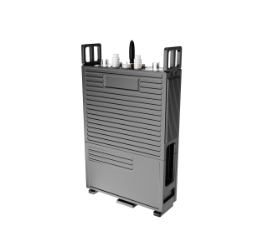
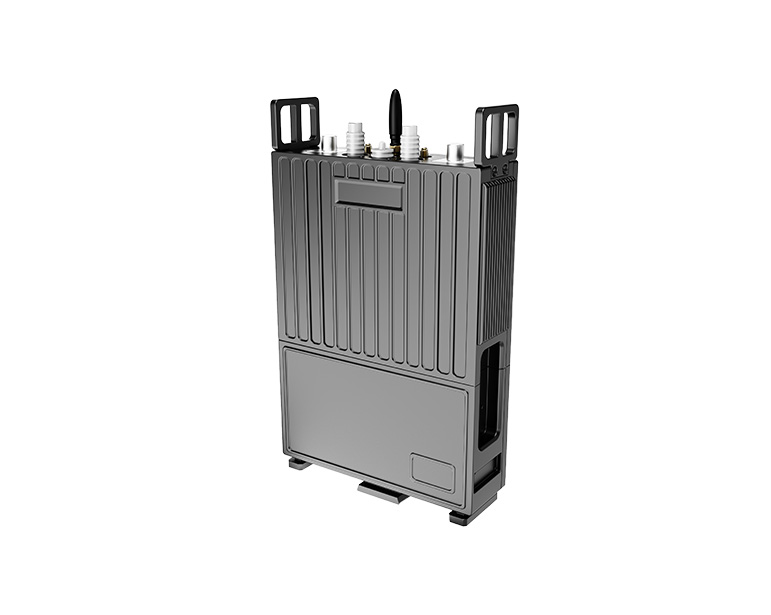
tqwifi's TQ-7302MB (Backpack Model)
Common Application Scenarios
Application Scenario | Communication Need |
Mountain search and rescue | Coverage in complex terrain |
Forest firefighting | Mobile communication support |
Earthquake rescue | Temporary communication restoration |
Large event security | Multi zone coordinated communication |
Compared with fixed communication systems, backpack devices are better suited for missions requiring rapid movement and temporary deployment.
Traditional systems usually require advance frequency planning and repeater positioning. IP Mesh radio supports automatic networking.
· High Mobility
Portable IP Mesh radio systems maintain continuous communication while personnel are on the move.
· High Network Stability
With a multi-path communication mechanism, the network remains operational even if some nodes disconnect.
Key factors affecting communication distance include terrain, antenna type, device height and environmental interference.
· Use Suitable Antennas
High-gain antennas help improve long distance communication capability.
· Raise Deployment Position
Higher installation reduces signal obstruction and improves coverage.
· Increase Node Count Reasonably
More relay nodes generally provide more stable network coverage.
tqwifi focuses on precision manufacturing of military and emergency communication equipment. The product portfolio includes:
· IP Mesh ad-hoc network devices
· 4G/5G communication modules
· Digital bridges
· Solar-wind hybrid power supply systems
· Anti-interference antenna structural parts
The company strictly follows military-grade quality standards. Products are widely used in emergency response, firefighting, public security, maritime affairs, electric power, aerospace and other industries, supporting man-portable, vehicle-mounted, airborne and shipborne deployment.
For detailed specifications of backpack IP Mesh radios or customized emergency communication solutions, please contact us. Visit the official website — the tqwifi technical team is ready to provide professional support.
Backpack IP Mesh radio enables fast wireless ad-hoc networking in complex environments, delivering reliable communication support for emergency missions.
Compared with traditional wireless communication methods, IP Mesh technology offers rapid deployment, ad-hoc networking, multi-hop transmission and high mobility, making it well-suited for modern emergency rescue scenarios.
As industry demand grows, backpack IP Mesh radio is becoming an important part of emergency communication systems.
Q1: Does IP Mesh radio require a base station?
A1: Usually not. Devices can automatically build a wireless network via multiple nodes.
Q2: What scenarios are suitable for backpack IP Mesh radio?
A2: Emergency rescue, firefighting communication, security patrols, mountain operations, large event support and similar situations.
Q3: What services does IP Mesh radio support?
A3: Voice communication, video transmission, GPS positioning and data transmission.
Q4: How can I improve IP Mesh radio coverage?
A4: Increase deployment height, add relay nodes and use high-gain antennas.
Q5: What is the difference between IP Mesh radio and traditional walkie-talkies?
A5: Traditional walkie‑talkies focus mainly on voice, while IP Mesh radio also supports video, positioning and data with ad‑hoc networking capability.