

What Is an IP Mesh Radio and How Does It Work?
2025-10-24


In the current field of security surveillance, the use of wireless bridges has become quite common. Compared to the situation in the past, the convenience of installation and the short construction period of wireless bridges have attracted more attention from people. Therefore, in many security surveillance construction processes, when it comes to wireless transmission, the longer the transmission distance required, the more details need to be paid attention to. Today, let's learn about the matters that need to be considered when building a long-distance wireless transmission system.
1. During the wireless transmission process, there must be no obstructions at the transmitting and receiving ends. If any obstruction is encountered, the equipment needs to be raised or a relay method should be adopted to solve the problem.
2. The constructed local area network must comply with the clearance standard of the Fresnel radius.
3. The established wireless transmission system should try to avoid strong interference sources. If it is necessary to be built in the same location as other radio transmitting devices, measures need to be taken to enhance the anti-interference capability of the equipment to ensure the normal operation of the wireless local area network.
4. When transmitting over distances exceeding 50 kilometers, it is best to adopt the method of relay to ensure the stability of transmission rate and bandwidth.
5. Long-distance wireless transmission is usually carried out in outdoor environments, so it is necessary to take measures such as rain protection, lightning protection, and dust prevention for the transmission equipment, and ensure compliance with national standards.
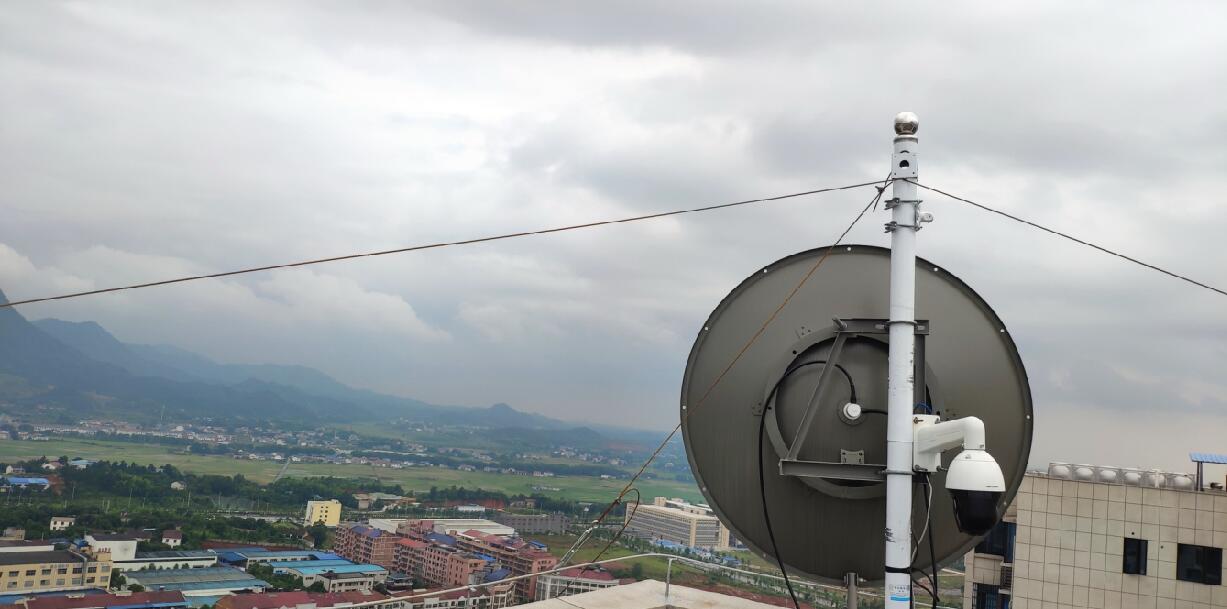
When the transmission distance exceeds 15 kilometers, it is generally no longer visible to the naked eye. For the wireless devices at both ends to achieve a good communication condition, the antenna angle needs to be aligned. In this case, the GPS positioning tool may be used to select the coordinates of the two points, and some small tools can be used to calculate the azimuth and elevation angles between the two devices. Combined with compass and other tools, the direction can be aligned. Usually, this can achieve a better communication effect. If the distance between the two points is even longer, more than 30 kilometers, in addition to using the GPS tool to calculate the azimuth angle, the antenna calibration tool inside the wireless device also needs to be used for antenna calibration to achieve the best transmission effect.
The above is the detailed explanation provided by Guancheng Technology on the matters to be noted when setting up a long-distance wireless transmission system. If you have specific requirements for wireless transmission, please feel free to contact our company. Our technical staff have rich on-site experience and will design a most comprehensive wireless transmission solution based on your actual needs.