

IP Mesh vs Traditional Wireless Network: What’s the Difference?
2025-10-28


In modern, multi-dimensional operations and emergency response, controlling and utilizing the airspace is paramount. The effectiveness of agile helicopters or reconnaissance drones hinges on a stable, clear, and low-latency aerial communication link. However, aviation platforms impose strict limits on weight, size, and power consumption.
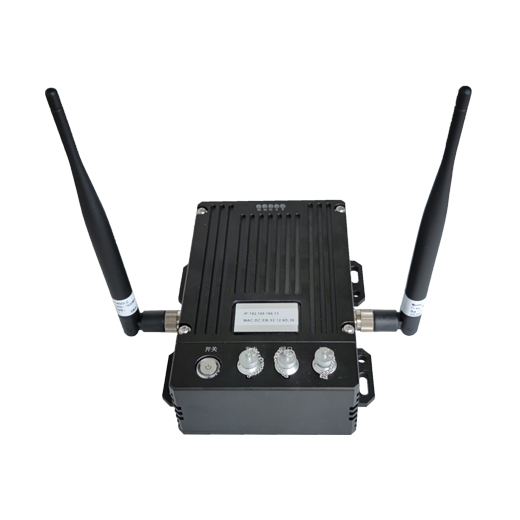
The Lightweight Airborne Radio is the key to this engineering puzzle. It is a technological marvel that serves as the nerve center, integrating air power into a unified command network. This article examines how TuQian's innovative Lightweight Airborne Radio solutions meet the extreme demands of aerial platforms and significantly enhance the efficiency of Emergency Command and Dispatch.
The Weight of the Challenge: Unique Demands of Aviation Platforms
Installing a radio on an aircraft is far from simple: it requires overcoming a series of severe physical and engineering challenges.
The Imperative of Lightweight & Compact Design: In aviation, every gram counts. Excess weight directly translates to reduced range, payload, or mission equipment. A Lightweight Airborne Radio must find the perfect equilibrium between performance and its physical footprint.
Surviving a Demanding Physical Environment: Equipment must withstand intense vibration, shock, and extreme temperature and pressure swings. The rapid transition from +40°C on the ground to -50°C at high altitude severely tests component reliability.
Navigating Complex Electromagnetics: An aircraft is a dense electronic ecosystem. The onboard radio must neither interfere with nor be affected by other systems, ensuring clean and secure communications.
Power and Thermal Constraints: Aircraft power is precious, and thin air at altitude complicates cooling. Radios must be highly energy-efficient and possess excellent thermal management to avoid becoming a burden on the platform.
A capable Lightweight Airborne Radio addresses these challenges with a specific set of core features that directly impact aerial command effectiveness.
Advanced Materials & Integrated Design: Using high-strength alloys, composites, and highly integrated chip-scale systems, these radios maintain structural integrity and full functionality while minimizing weight and volume, truly "mastering the skies with less weight."
Robust Vibration Resistance & Wide-Temperature Operation: Internal components are secured with potting and ruggedized connectors to ensure reliability under constant vibration. Military-grade components guarantee performance across a vast operating temperature range.
Software-Defined Radio & Smart Spectrum Management: Leveraging SDR technology, a single hardware platform can support multiple waveforms and protocols via software updates. It features strong anti-jamming and frequency-hopping capabilities, intelligently selecting the best channel in a crowded electromagnetic spectrum.
Seamless Integration into Command Networks: The modern Lightweight Airborne Radio is more than a voice link; it's a data relay. It can seamlessly and securely transmit real-time video and reconnaissance data from aerial platforms (like drones equipped with Video Transmission UAV Radios) to ground-based Emergency Command and Dispatch Radio centers, closing the "sensor-to-shooter" loop.
TuQian recognizes that an exceptional Lightweight Airborne Radio impacts not only mission success but also the safety of aircrew and valuable platforms. In its aviation product line, TuQian enforces standards that often exceed the norm.
Designing for Reliability from the Start:
TuQian engineers treat "environmental adaptability" as a design starting point, not a final validation step. Material selection prioritizes proven aviation-grade options with high strength-to-weight ratios and excellent thermal stability. Circuit designs incorporate redundancy and derating principles, ensuring system stability even if individual components are pushed to their limits.
The Pursuit of Precision Manufacturing:
On the production line, every Lightweight Airborne Radio is a product of meticulous care. Precision CNC machining ensures perfect alignment between the housing and internal structure, providing robust physical protection and efficient heat dissipation. Strict confidential production management safeguards information security from the source.
Evolving for Collaborative Warfare:
TuQian is actively developing its Lightweight Airborne Radio technology for smarter collaboration with other assets (like the Powerful Backpack Radio). Through adaptive networking protocols, future airborne and ground radios will automatically form dynamic, resilient, and hard-to-disable tactical networks, greatly enhancing the toughness and intelligence of Emergency Command and Dispatch systems.
How the Powerful Backpack Radio is Redefining Military Outdoor Communications
TuQian is a high-tech enterprise focused on the precision manufacturing of military communication equipment, dedicated to safeguarding national communication security with precision engineering. From material selection and precision machining to environmental testing and confidential production management, TuQian controls every step with unwavering military standards. Whether it's the sky-bound Lightweight Airborne Radio or the rugged Powerful Backpack Radio, TuQian ensures every product performs reliably in extreme conditions. Moving forward, TuQian will continue to pioneer communication technologies, driving innovation to help build a more secure and intelligent national defense communication system, steadfastly guarding the nation's information frontiers.