

IP Mesh vs Traditional Wireless Network: What’s the Difference?
2025-10-28


In July 2025, the MESH network deployment agreement reached between the US Navy and United Mesh Solutions marked the entry of military logistics management into the era of full asset visibility. This system engineering, covering multiple naval bases and involving over 40,000 key equipment (including forklifts, small vessels) and emergency personnel, achieved three major breakthroughs that were beyond the reach of traditional communication architectures through decentralized self-organizing network technology: dynamic routing self-healing capability, long-range endurance guarantee in the field environment, and predictive maintenance data loop. Its technological innovation not only restructured the equipment management process but also provided the underlying support for the distributed combat system at the tactical level.

In military scenarios, a communication disruption often indicates the failure of a mission. The MESH network deployed this time adopts the FIPS-140 encryption protocol (with a security level of 3), and achieves an "equipment failure - path switching - data continuity" automatic response through a dynamic routing reconfiguration algorithm. When a relay node fails due to physical damage or electromagnetic interference, the network topology will be recalculated within 150 milliseconds, ensuring the real-time transmission of command instructions and sensor data. This capability has been verified in a simulation test at a base in the Western Pacific: when three nodes are simultaneously damaged, the network can still maintain a 98% bandwidth utilization rate, while the communication interruption rate of the traditional star network exceeds 60%.
It is worth noting that the anti-destructive design of this system not only relies on software algorithms, but also strengthens physical security through a hardware-level tamper-proof mechanism. For instance, the equipment uses the Maxim DS36xx series security monitor, which integrates 12 internal detection modules such as temperature sensors and battery monitors. It can automatically erase the encryption key within 0.5 seconds in the event of a liquid nitrogen freezing attack, ensuring that the data is not illegally accessed. This "soft and hard collaboration" security architecture enables the network to meet the FIPS-140 standard while achieving the anti-physical attack capability required for NSA Type 1 certification.
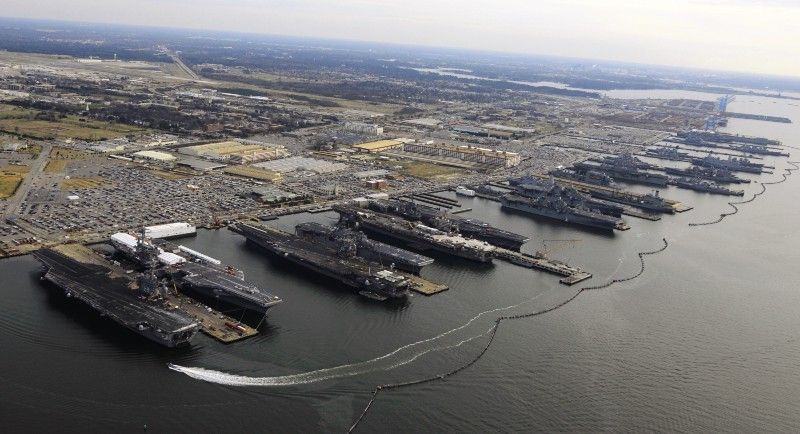
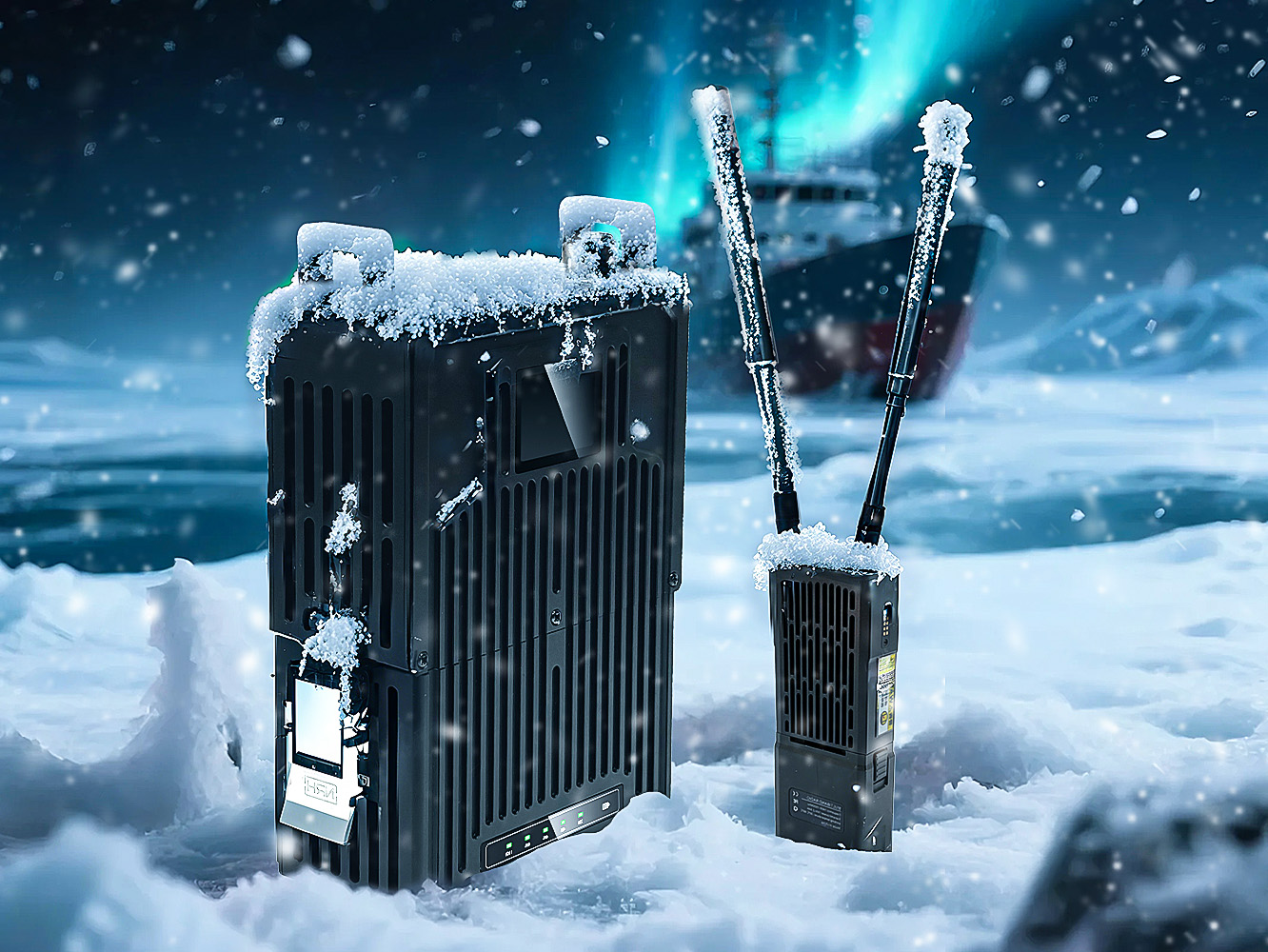
Given the extensive distribution and complex environment of naval bases, the terminal equipment developed by United Mesh Solutions adopts a dual power supply mode of solar energy and lithium battery. It can maintain continuous operation for 72 hours without an external power source. This design performed exceptionally well in the actual combat test at the naval base in Bahrain: in an environment with an average summer temperature of 45℃ and humidity of 75%, the equipment automatically reduces the transmission power during non-critical periods through dynamic power regulation technology. The single charging duration is three times longer than that of traditional equipment. Its solar panel is made of flexible cadmium telluride material, which can withstand 100Bar water pressure flushing and is suitable for high salt spray environments such as the decks of ships.
What is even more innovative is that the system achieves "on-demand allocation" through an energy management algorithm: when it detects that the battery level of equipment in a certain area drops below 20%, nearby nodes will automatically take on the task of data forwarding, ensuring the continuous operation of the entire network. This distributed energy scheduling mechanism reduces the frequency of logistical support during field deployment by 50%, significantly enhancing the sustainability of long-term operations.
Traditional military logistics relied on manual inspections and regular maintenance, which was inefficient and prone to missing potential hazards. The MESH network deployed this time collects parameters such as temperature, humidity, and vibration of equipment in real time through multi-modal sensors, and combines machine learning models to build a digital twin of equipment health. For example, in the test at the San Diego Naval Base, the system detected the gear box wear fault 72 hours in advance by analyzing the vibration spectrum of the small ship engine, reducing the maintenance cost by 30%. This predictive maintenance model enables logistics personnel to shift from passive response to active intervention, and is expected to save $230 million in unplanned downtime losses annually.
The extension of data value is more evident at the tactical level. When emergency personnel carry terminals into dangerous areas, the system can achieve 5-meter accuracy tracking through UWB positioning technology, and combine with AI behavior analysis models to identify abnormal states (such as falls, loss of balance). In the Pearl Harbor simulation exercise, this function reduced the time for locating injured personnel from 15 minutes to 90 seconds, and increased the medical response efficiency by 80%.
With the advancement of the "Joint All-Domain Command and Control" (JADC2) concept, the US military is building a decentralized combat network. The MESH network deployed this time, with its decentralized architecture and multi-hop relay capabilities, naturally aligns with the requirements of distributed operations. For instance, when satellite communication is disrupted, the MESH nodes at various bases can automatically form a tactical-level communication backbone network, enabling cross-platform data sharing. In the 2024 "Rim of the Pacific" military exercise, similar technologies have verified the feasibility of coordinated operations by drone clusters: 30 drones achieved real-time situation sharing through the MESH network, and the accuracy rate of target recognition increased by 40%.
This collaboration exemplifies a typical path where military technology benefits civilian applications. For instance, the adaptive power regulation algorithm used in the system has been transformed into a civilian version by United Mesh Solutions and applied to Yunling Intelligent's forest fire prevention system. In a 0.8 coverage density coniferous forest, the signal attenuation rate is less than 20%, which is three times higher than that of traditional equipment. Moreover, the military-grade FIPS-140 encryption technology is also penetrating into the industrial Internet of Things through the open-source community, promoting the upgrading of manufacturing data security standards.
The traditional "preventive maintenance" model is being replaced by data-based precise maintenance. Through the equipment health records built on the MESH network, the US military can dynamically adjust maintenance cycles: for instance, the maintenance interval of a certain type of shipborne crane was extended from the fixed 500 hours to 720 hours of actual usage, resulting in a 44% increase in equipment utilization. This condition-based maintenance (CBM+) is expected to save the US military $12 billion in logistics expenses by 2030.
Despite its significant technological advantages, the MESH network still faces challenges in military applications such as spectrum resource competition and cross-platform compatibility. For instance, the frequency bands of the US military's current Link 16 data link overlap with those of the MESH network, requiring the use of dynamic spectrum access technology to achieve coexistence. Additionally, the protocol interoperability issues among different manufacturers' equipment may create communication barriers during joint operations by multiple military branches. To address this, United Mesh Solutions has collaborated with DARPA to develop an open architecture standard and plans to achieve seamless integration with existing tactical communication systems by 2026.
Looking to the future, the MESH network will deeply integrate into the 6G military communication system. According to the "White Paper on New Cell and Networking Architecture of 6G", its distributed nodes can serve as edge computing units, enabling millisecond-level collaborative decision-making for drone groups. In the civilian sector, this technology is driving the upgrade of smart city emergency response networks - for instance, a certain new district in Shenzhen has piloted an earthquake early warning + personnel evacuation linkage system based on MESH, reducing the response time to one fifth of the traditional solution.
The deployment of the MESH network by the US Navy is essentially a microcosm of how digital technology reconfigures military capabilities. Its value lies not only in enhancing the efficiency of equipment management, but also in providing an elastic communication infrastructure for scenarios such as distributed operations and emergency responses. This three-level linkage of technology - tactics - strategy may redefine the rules of future warfare. As the chief technology officer of United Mesh Solutions said: "We are not deploying a network; we are building the nervous system of the military system."