

IP Mesh vs Traditional Wireless Network: What’s the Difference?
2025-10-28


WiFi plays an indispensable role in 5G as well. In the early stage of 5G commercialization, the network has not achieved full coverage. Especially when many smart terminal devices do not support 5G, the "5G + WiFi" CPE has become popular, which is jokingly called a "pseudo 5G" transitional solution by industry insiders. Even if 5G becomes widespread in the near future, due to the limited coverage area of high-frequency base stations, it is impossible to cover every corner. Driven by high speed and low cost, WiFi6, which emphasizes high transmission rate, will further become popular.
WiFi6 in the WLAN context plays a role similar to that of 5G in the WWAN domain. It represents a step-by-step evolution of communication standards in response to consumers' demands for high bandwidth.
Among the mainstream WLAN network technologies, WiFi holds the most accessible and widespread position. You don't have to use Bluetooth or Zigbee, but you simply can't do without WiFi...
WiFi plays an indispensable role in 5G as well. In the early stage of 5G commercialization, the network has not yet achieved full coverage. Especially when many smart terminal devices do not support 5G, the use of "5G + WiFi" CPE has become very popular, and it has been jokingly called a "pseudo 5G" transitional solution by industry insiders.
Even if 5G becomes widely available in the near future, due to the limited coverage area of base stations at high frequencies, it will not be able to cover every corner. Driven by high speed and low cost, WiFi6, which emphasizes high transmission rates, will further become popular.
What needs to be further clarified here is that the 5G in WiFi is not the same as the 5G we usually hear about (mentioned in the previous paragraph). The 5G we often refer to is the 5th generation of mobile communication, while the 5G in WiFi refers to 5GHz, which is the wireless frequency/spectrum.
Because WiFi mainly operates in the unlicensed ISM frequency band (Industrial Scientific Medical), the main frequency bands available for WiFi use include the 2.4GHz band (range 2.4 - 2.4835GHz) and the 5GHz band (range 5.725 - 5.875GHz), all of which belong to the microwave frequency band.
From WiFi5 to WiFi6, it represents a technological evolution as well as a standard evolution. There is a certain industry scale and a vast market space. However, entrepreneurial opportunities are difficult to discover. This is not a breakthrough or disruptive technology. From WiFi4 to WiFi5 to WiFi6, it is merely a smooth upgrade and evolution of the original technology. The excitement is shared by others, the game rules remain the same, and the players are still the same. Everyone participates in the event and enjoys the show. There are opportunities, but they are not everywhere. They are like gold found in the sand.
Now let's take a look at what WiFi6 actually is.
First of all, the term "WiFi" is actually a "stage name". The underlying technology is wireless communication technology, including features such as MU-MIMO and OFDMA that WiFi6 emphasizes. The corresponding industry standard is the 802.11 series. The main driver behind it is IEEE, and the most active players among them are the IC giants led by Intel.
That is: The standard formulation is carried out at IEEE-SA, while the industry promotion is handled by the WiFi Alliance. Each party performs its own duties and is bound by mutual interests.
The WiFi standard (of the 802.11 series) was born in 1999. After 20 years of development, there has been an upgrade of the standard approximately every 5 years, mainly for the purpose of bandwidth improvement.
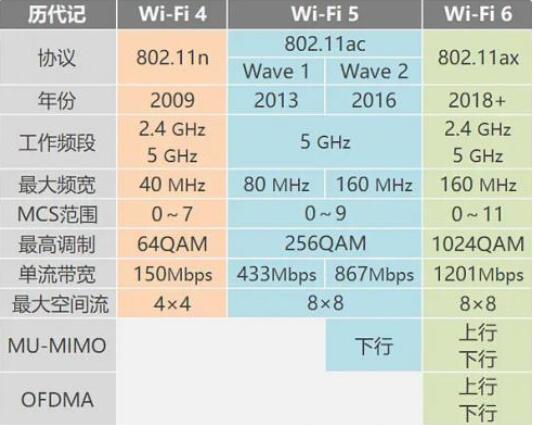
In fact, several years ago, WiFi was not differentiated in the same way as 2G, 3G, 4G, and 5G. In the industry, it was generally classified based on the 802.11 series standards. For example, this router supports 802.11b/g/n/ac... The real classification into different generations began in October 2018. The WiFi Alliance, as a "non-profit" business organization, in order to better promote WiFi technology, followed the naming convention of mobile communications and divided WiFi into different levels. This made it extremely clear and greatly facilitated the commercial promotion.
Last year, there was widespread speculation that Huawei was suspended from membership of the WiFi Alliance. If this were to happen, it would also affect Huawei's future industrial layout in the WiFi field. The standard participation rate would decline, and its own technological interests would be difficult to guarantee; product certifications would be hindered, and the interconnection with other products would also be difficult to ensure. Regarding WiFi6, the WiFi Alliance began to conduct certifications for devices in 2019. Therefore, 2019 was also regarded as the first year of the WiFi6 industry.
Among them, the WiFi6 discussed in this article is based on the latest 802.11ax standard. As mentioned earlier, the evolution of the 802.11 standard is mainly aimed at improving the transmission rate.
From the most fundamental principle of communication (Shannon's theorem), the most effective way to increase the transmission rate of wireless communication is to expand the bandwidth. The most direct and crude method to increase bandwidth is to raise the frequency. The higher the frequency, the richer the spectrum resources. The GHz band has much more abundant resources compared to the MHz band.
Therefore, the focus of WiFi6 lies in the 5GHz frequency band. With a single 80MHz bandwidth, the maximum speed can reach 600Mbps, significantly enhancing the user experience.
In addition to the frequency upgrade, WiFi6 also adopts MU-MIMO and OFDMA physical layer technologies. In the field of wireless communication, there are numerous overlapping aspects among different wireless communication standards, especially in terms of the underlying technologies.
Everyone should still remember that in the promotional and popularization articles about 5G mobile communication, OFDMA and MU-MIMO were also emphasized as the core technologies.
The author first came into contact with OFDMA around 2006. At that time, WiMAX technology (the 802.16 series) was being promoted for industrialization, and it was also emphasizing the modulation technology of its physical layer, OFDM and OFDMA...
The terms OFDM and OFDMA can be visualized as the lanes of the Jingsha Expressway. Each user's communication is like a convoy, carrying various types of data, such as car convoys, taxi convoys, and truck convoys... Every convoy arrives and is allocated a fixed lane. This is OFDM. As a result, there may be empty lanes for cars while trucks are congested, leading to inefficient use of resources. However, OFDMA allows different convoys to squeeze into the lanes based on the availability of empty lanes, and each lane forms several "sub-virtual lanes", thereby improving efficiency and the utilization rate of the lanes.
And MU-MIMO (MulTI-User MulTIple-Input MulTIple-Output, Multi-user - Multi-input - Multi-output) is much easier to understand. MIMO refers to multiple antennas. The ability of multiple antennas to transmit data is definitely greatly enhanced, just like one lane turning into four lanes; and "multi-user" means that the base station can simultaneously communicate with multiple users (note that it is simultaneous, not the maximum number of users that can be connected).
In fact, since WiFi4, downlink MU-MIMO support has been available. Wireless routers support multi-antenna multi-user. By WiFi6, both uplink and downlink support multi-antenna multi-user, and it can support 8 users to simultaneously perform data transmission for both uplink and downlink.
The above are the two core technologies of WiFi6. In summary, wireless communication is more or less like this. Technological development has basically reached its peak. The core principles of different communications are largely similar, and there is a high degree of technical overlap. The main differences lie more in commercial application scenarios and whether the adopted wireless communication spectrum is an authorized band or an unlicensed band.
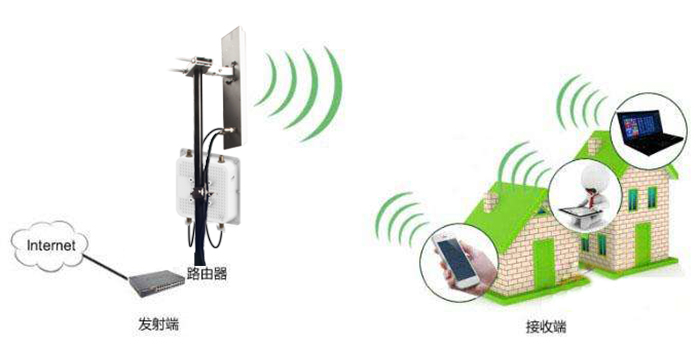
Next, let's take a look at the specific development situation of the industry. Just like in other mobile communication fields, the WiFi industry chain also consists of three major components: chips, modules, and devices. Among them, the devices include the transmitting terminal (wireless AP) and the receiving terminal (various 3C, IoT devices, etc.).
The demand for terminals is the most crucial driving force for the WiFi industry. The global annual shipment of WiFi chips is as high as several billion. In 2019, the annual shipment of smartphones alone reached 1.3 billion. WiFi is almost a standard feature, accounting for half of the WiFi chips. The rest are laptops, tablets, IoT terminal devices, such as smart home devices, wearable devices, VRAR, and vehicle-mounted electronic devices, etc.