

What Is an IP Mesh Radio and How Does It Work?
2025-10-24


Since the advent of network transmission technology in the 1960s, the development of network technology has been extremely rapid. Traditional local area networks such as star structure, ring structure, bus structure, distributed structure, and tree structure have all played a role in various fields, providing stable network connections and a large amount of data traffic for billions of people worldwide. However, there is such a local area network technology that was born very early, but due to its complex structure, it did not receive much attention. But with the development of wireless network technology to this day, its advantages have been re-valued. This network is the Mesh network, also known as the mesh network structure. Today, we will introduce in detail what kind of technology the Mesh network is.
The development of network technology has brought about tremendous changes to human society. It has made communication easier for people, facilitated the transmission of information more conveniently, and even contributed to technological revolutions and industrial upgrades. The network has evolved from the early wired networks and military networks to the current wireless networks and wide area networks, significantly reducing the cost of communication among people. From knowing everything instantly to conducting global transactions and exchanges, it truly realizes the equality of global information exchange. However, the traditional local area network technology, during its development process, due to technical limitations, chose a certain path. From today's perspective, this path seems to have certain bottlenecks and limitations. The solution to this problem is to "return to the original intention" and move towards the Mesh network, that is, the mesh network structure.
Before discussing the Mesh network structure, it is necessary to first explain the basic network topology of the traditional local area network structure that has already reached its limitations.
The basic structures of a local area network include star structure, ring structure, bus structure, distributed structure, and tree structure, etc. The most common and widely used star structure has a central node as the core, and all other nodes are connected to the central node. This structure has higher costs and lower reliability, but it has low latency and a simple structure that is easy to manage. The bus structure is where each network device is connected to a single bus, with no obvious center. Its advantages are simple structure and good scalability, but its disadvantages are also obvious, such as difficult maintenance and difficult fault location in branch structures. To be more secure and efficient in use, most commercial local area networks currently in operation adopt a combination of multiple network topologies, aiming to maximize the performance of the local area network and avoid obstacles.
For ordinary users, we generally do not concern ourselves with how the operator's data center should be arranged. The local area network that they can most directly access is the network setup in their homes, workplaces, or even in their communities. Currently, the typical local area network setups all adopt a star structure or a multi-layer star structure. The network is connected through the main router, then distributed to various sub-routers, and finally connected to different hosts and devices. Such wiring is relatively simple to implement and requires a relatively small number of cables. This layout method and its concept span both wired and wireless eras. For example, in the home, users will connect to the network from network service providers such as Telecom or Unicom, and then use a wireless router to distribute multiple signals or wireless signals to multiple wired and wireless devices in the home, which is also a typical star structure.
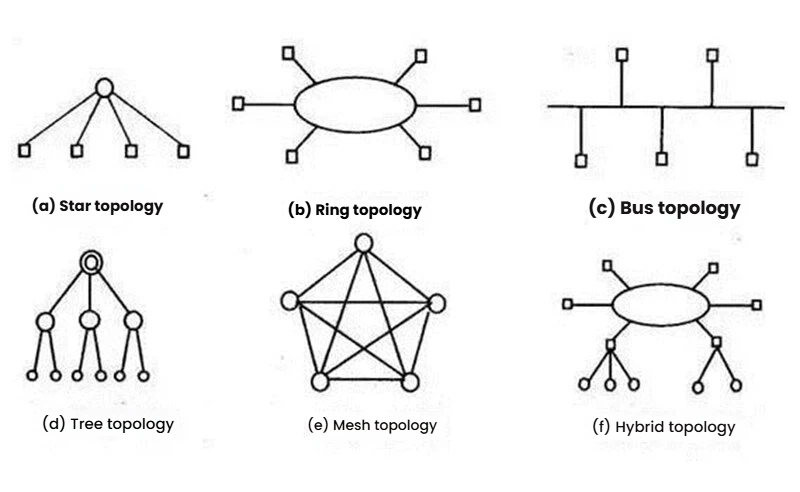
Basic network topology structure
The basic structures of a local area network include star structure, ring structure, bus structure, distributed structure, and tree structure, etc. The most common and widely used star structure has a central node as the core, and all other nodes are connected to the central node. This structure has higher costs and lower reliability, but it has low latency and a simple structure that is easy to manage. The bus structure is where each network device is connected to a single bus, without a clear center. Its advantage is a simple structure and good scalability, but its disadvantages are also obvious, such as difficult maintenance and difficulty in locating faults in branch structures. To be more secure and efficient in use, most commercial local area networks currently in operation adopt a combination of multiple network topologies, aiming to maximize the performance of the local area network and avoid the occurrence of obstacles.
For ordinary users, we generally do not concern ourselves with how the operator's data center should be arranged. The local area network that they can most directly access is the network setup in their homes, workplaces, or even in their communities. Currently, the typical local area network setups all adopt a star structure or a multi-layer star structure. The network is connected through the main router, then distributed to various sub-routers, and finally connected to different hosts and devices. Such wiring is relatively simple to implement and requires a relatively small number of cables. This layout method and its concept span both wired and wireless eras. For example, in the home, users will connect to the network from network service providers such as Telecom or Unicom, and then use a wireless router to distribute multiple signals or wireless signals to multiple wired and wireless devices in the home, which is also a typical star structure.
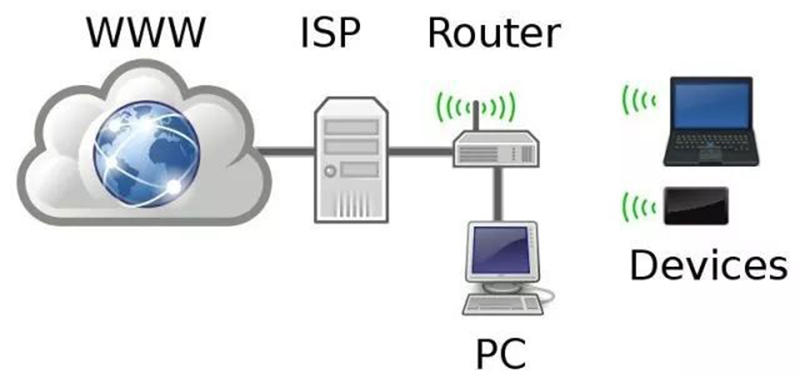
The home network typically employs the most common star-shaped topology structure.
The development of local area network topologies such as star structures and bus structures has led to the explosion of the Internet. However, their inherent flaws have remained unavoidable, such as the security and reliability of data centers, and the maintenance difficulty of bus-type arrangements. Although technicians have strengthened traditional local area network structures through various means and even used composite topologies, due to the unresolved inherent problems, people's experience still cannot be guaranteed.
To break through the limitations of the traditional local area network structure, in recent years, a network topology that is not new but has been overlooked due to technical constraints has come to the forefront. This is the Mesh - a mesh network structure.
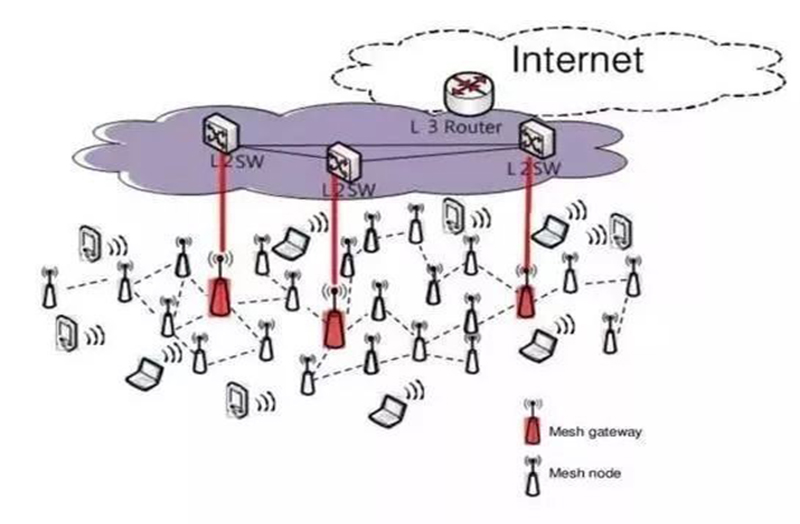
Typical Mesh (mesh network) structure
When it comes to the word "Mesh", its English meaning is quite simple - it refers to a network, a grid, or a mesh-like structure. According to its basic definition, the topology of a mesh network is as follows: all the nodes in the network are interconnected with each other, and each node is connected to at least two other nodes. All the nodes form a unified network as a whole. In the wired era, due to the existence of network cables, implementing a Mesh layout network was extremely difficult. However, in the wireless era, since it was free from the constraints of network cables and through the application of various new technologies, the layout of wireless Mesh networks became relatively easier.
From the perspective of network topology, the wireless Mesh network has the following characteristics:
Node interconnection: All nodes in the local area network are connected together. Any two nodes have multiple connection channels between them, and a clear decentralized trend is presented. It is composed of a group of wireless APs distributed in a network-like manner. All APs are interconnected through wireless relay links in a point-to-point manner, expanding the wireless "hotspots" in traditional WLAN into truly large-area covered wireless "hot zones".
Self-configuration: In wireless Mesh networks, the APs have the capabilities of automatic configuration and centralized management, which simplifies the management and maintenance of the network.
Self-healing: In the wireless Mesh network, the APs have the ability to automatically discover and establish routing connections, eliminating the impact of single-point failures on services and providing redundant paths.
High bandwidth: The "hotspot" coverage of traditional WLAN is expanded to a larger "hotzone" coverage, eliminating the bandwidth reduction caused by the increase in distance in the original WLAN. Additionally, with the Mesh structure system, the signal can avoid the interference from obstacles, ensuring smooth signal transmission and eliminating blind areas.
High Utilization: High utilization is another technical advantage of the Mesh network. In a single-hop network, a fixed AP is shared among multiple devices. As the number of network devices increases, the availability of the communication network for the AP will significantly decrease. However, in a Mesh network, since each node acts as an AP, such problems do not occur. If the availability of a certain AP drops, the data will automatically select another AP for transmission.
Compatibility: Mesh operates on the standard 802.11b/g/n/ac protocols, and can be widely compatible with various wireless client devices.
From an application perspective, the advantages of wireless Mesh networks are also quite obvious:
Fast deployment, simple installation
The deployment of Wireless Mesh networks is fast and the installation is easy. Since data is transmitted wirelessly, users only need to take out the device from the packaging box, connect it to the power supply, and then enter the configuration page. This is because in Wireless Mesh networks, except for a few node devices that require network cables and AP connections, the vast majority of devices only need a power cord and do not require network cables or AP connections. All data is transmitted wirelessly. As a result, not only is the connection speed greatly improved, but the difficulty of wired layout is also reduced, making it very convenient.
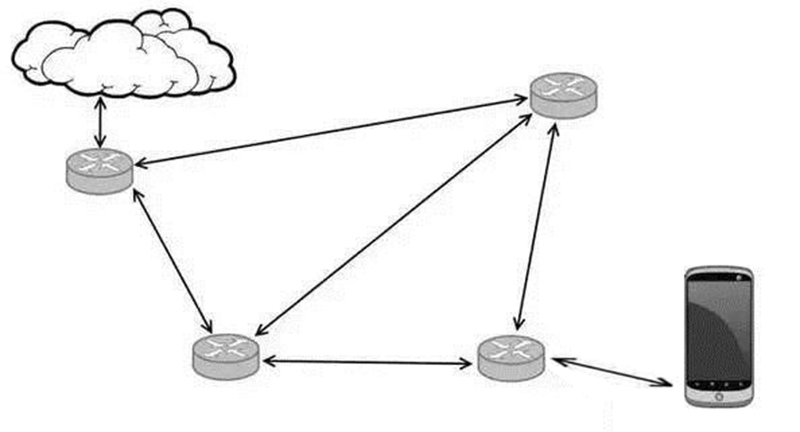
Data is transmitted wirelessly between the nodes.
The robustness of the wireless Mesh network is outstanding.
We know that in current common local area networks, all data is transmitted and received through a single AP. In a local area network, if there is a central AP, since there is only one path for data transmission, it is very likely to cause data congestion or failure (such as the AP connection being disconnected or the equipment being damaged, etc.) in practical use. However, in wireless Mesh networks, due to their multi-hop network characteristics, a node can connect to at least two other nodes. When a certain node is blocked or unresponsive, the wireless Mesh network can select other nodes to relay the data according to the situation. In other words, the wireless Mesh network has at least one backup path, so its data transmission reliability is very high.
Realize non-line-of-sight transmission
Another feature of the wireless Mesh network is the ability to provide non-line-of-sight transmission. Non-line-of-sight transmission refers to the function of providing transmission in areas outside the coverage range of the original signal. This is quite understandable because each node has the characteristic of simultaneously receiving and sending, which is equivalent to expanding the coverage of the network to a certain extent. For example, in a traditional network, there is only one data sending node, which is the central node connected to the AP. Within the coverage range of the central node, data sending and transmission are effective, but it becomes ineffective when the distance increases.
In a wireless Mesh network, each node acts as a repeater, which effectively expands the data coverage area and enables the provision of network services to users located beyond the line-of-sight of the connected AP. This significantly enhances the application scope and coverage of the wireless network.
Flexible structure
In fact, the flexibility of structure is related to robustness. That is, there is no data congestion or node failure. When data needs to be transmitted between two nodes in a wireless Mesh network, the nodes can automatically select the forwarding path with the fastest response time and the highest transmission speed based on the connection and response conditions, avoiding node communication congestion. Even for some nodes with extremely high permissions, they can simultaneously choose multiple nodes to concurrently transmit data to multiple targets, greatly saving data transmission time and improving efficiency.
High bandwidth and high transmission efficiency
Bandwidth is always a difficult problem to solve. Due to the characteristics of wireless communication, bandwidth can be easily increased only when the transmission distance is relatively short. However, the transmission distance of data is closely related to the strength of the signal, and the coverage area of the traditional single-center method is limited. Because of the non-line-of-sight transmission characteristic of wireless Mesh networks, the signal coverage is better and the strength is higher, making it easier to achieve an increase in total bandwidth. Additionally, due to the role of node relaying, the signal coverage of wireless Mesh networks is excellent, so the power required for transmission is reduced, which also helps with energy conservation.
Wireless Mesh networks significantly enhance signal coverage range.
From the above introduction, it is easy to see that the advantages of the wireless Mesh network are extremely prominent. It can solve the problems of the common star-shaped and bus-shaped local area networks, and can also expand more functions related to security, stability and high bandwidth. If it can be applied to new wireless network products, it is expected to lead the further development of network technology and achieve higher transmission speeds and wider signal coverage.
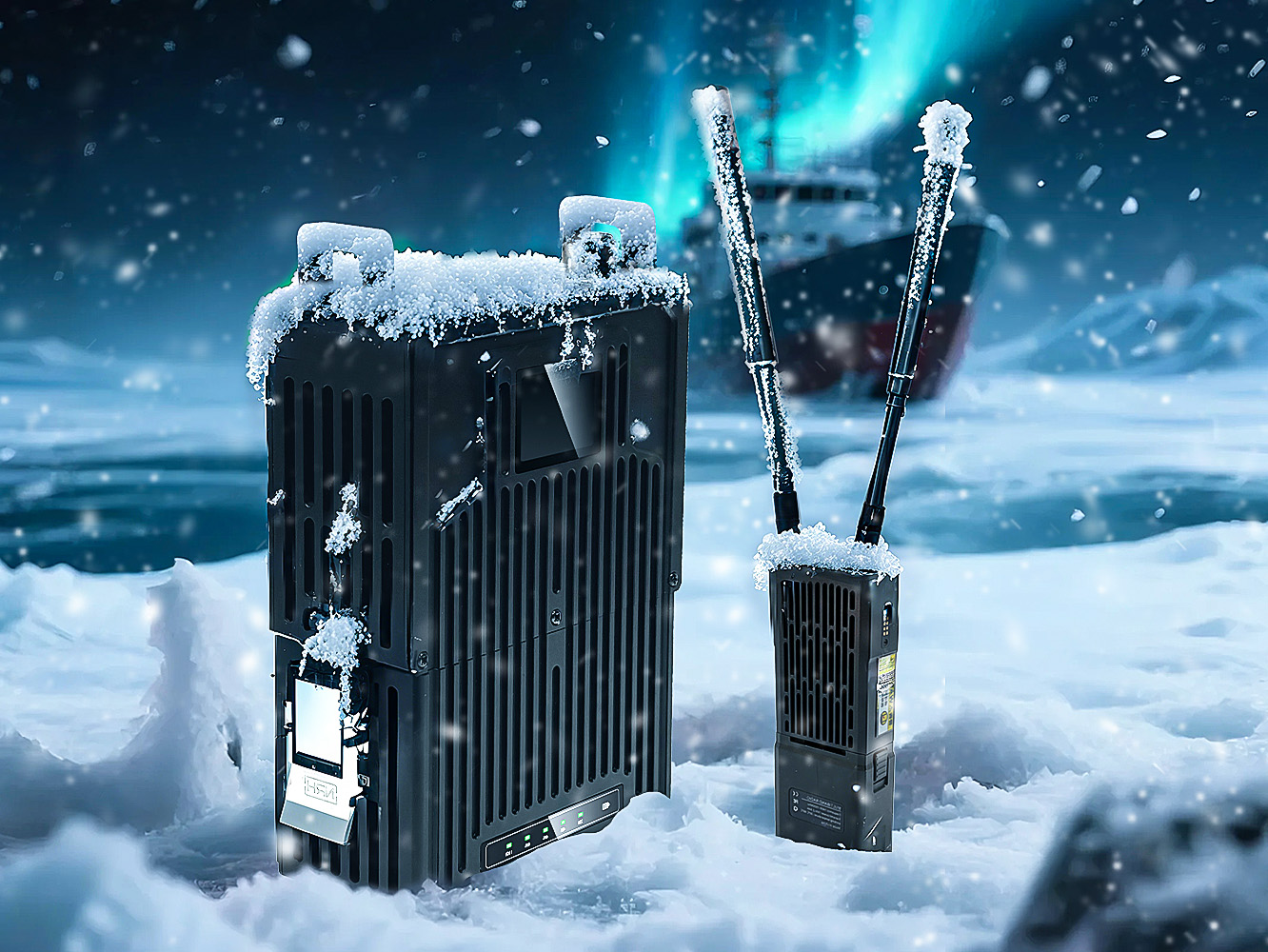
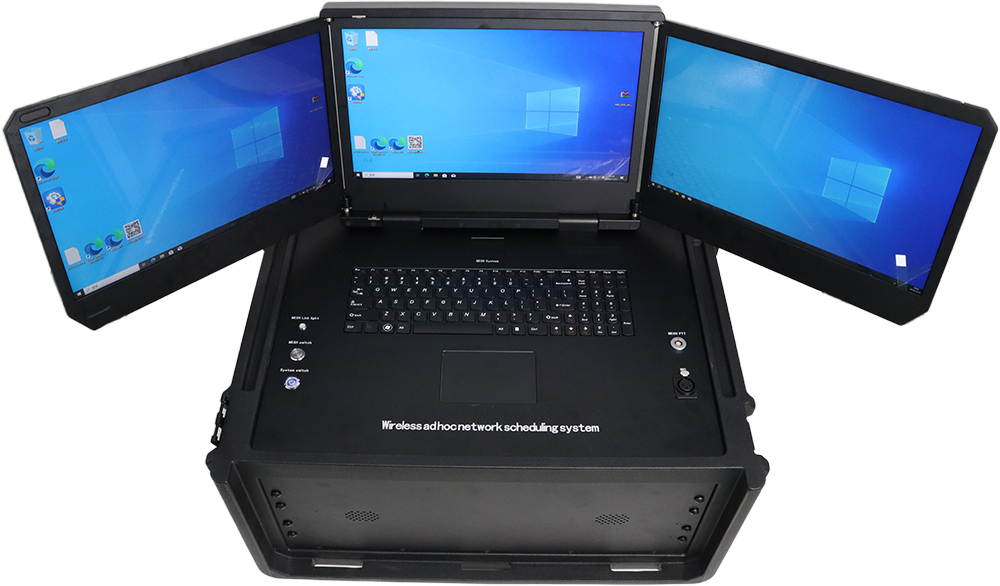
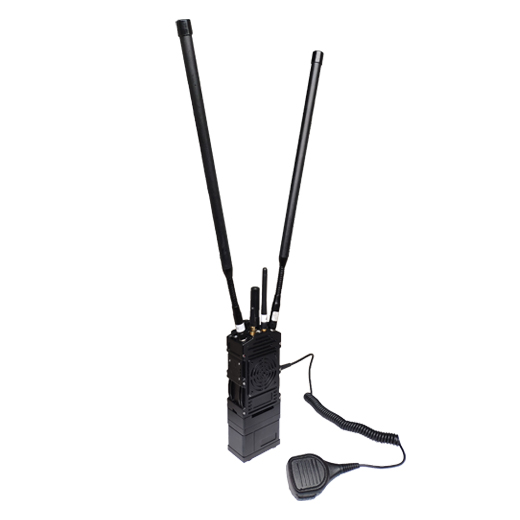
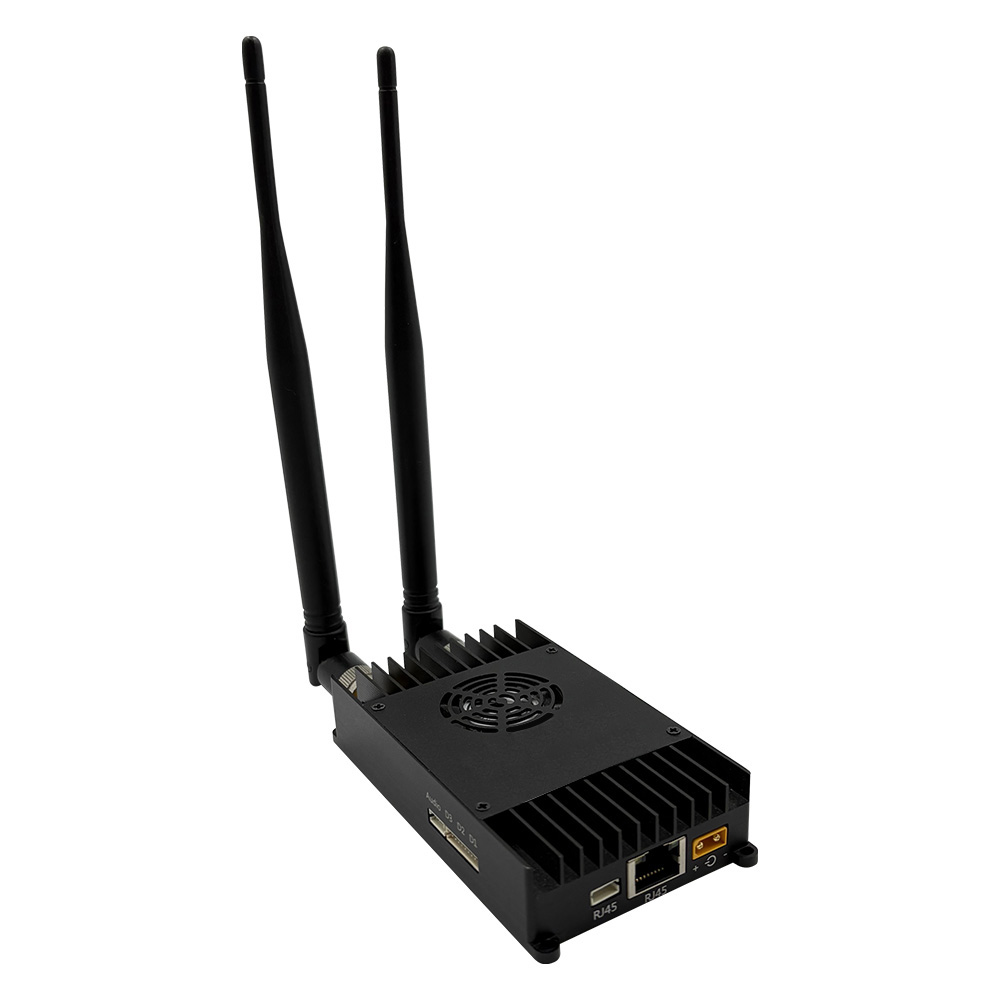
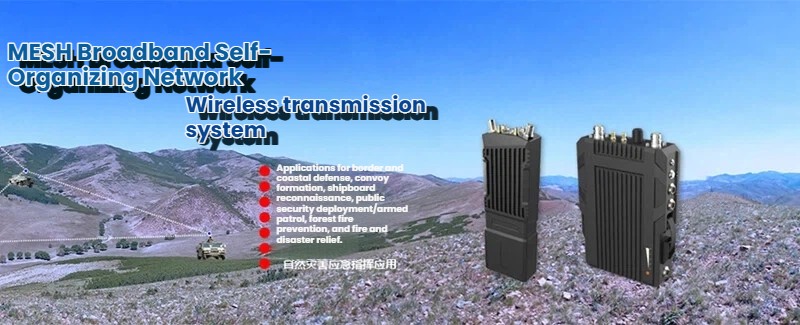
Our company has recently launched a series of wireless devices based on Mesh wireless transmission technology, which possess transmission advantages that wireless devices do not have. They feature an all-IP design, flexible installation and use, convenient operation and maintenance, and can provide customization for multiple frequency bands, expand WIFI, GPS, 3G/4G functions, and support integrated communication needs. They can be flexibly applied to military communication dedicated networks, public security dedicated networks, emergency communication dedicated networks, industry information dedicated networks, regional broadband dedicated networks, wireless monitoring dedicated networks, collaborative management dedicated networks, and intelligent transmission dedicated networks, etc. They provide stable, reliable, and efficient high-definition video, multi-channel data, clear voice, and visualized command and dispatch for military communication, counter-terrorism and emergency response, public security law enforcement, security activities, rescue operations, fire command, forest fire prevention, forest area monitoring, civil defense / earthquake, power inspection, digital oilfield, unmanned aircraft groups, fleet intercommunication, ship formation, maritime communication, airport ground support, subway emergency, highway construction, hydrological monitoring, mobile live broadcasting, medical care, and other fields.
Whether in terms of technology or principle, the Mesh network is superior to the wireless technology we currently use. In key indicators such as coverage area and performance, the wireless Mesh network, thanks to its inherent structural advantages, achieves excellent network coverage effects, and its development prospects are widely optimistic!