

What Is an IP Mesh Radio and How Does It Work?
2025-10-24


The rapid economic development has led to a continuous increase in living costs. Correspondingly, labor costs and construction expenses are also rising steadily. The conditions for outdoor construction are generally quite challenging. In summary, the construction costs will only keep increasing in the future.
The original wired monitoring wiring mostly adopted wired optical fibers, coaxial cables, etc. for wiring. However, with the increasing diversity of building structures and changes in climate and environment, in order to better meet project requirements, more and more engineering companies choose to adopt flexible wireless bridge project solutions. The reason is simply that the equipment cost is decreasing while the construction cost is increasing. Reducing the construction cost to increase profits is the primary problem faced by engineering companies.
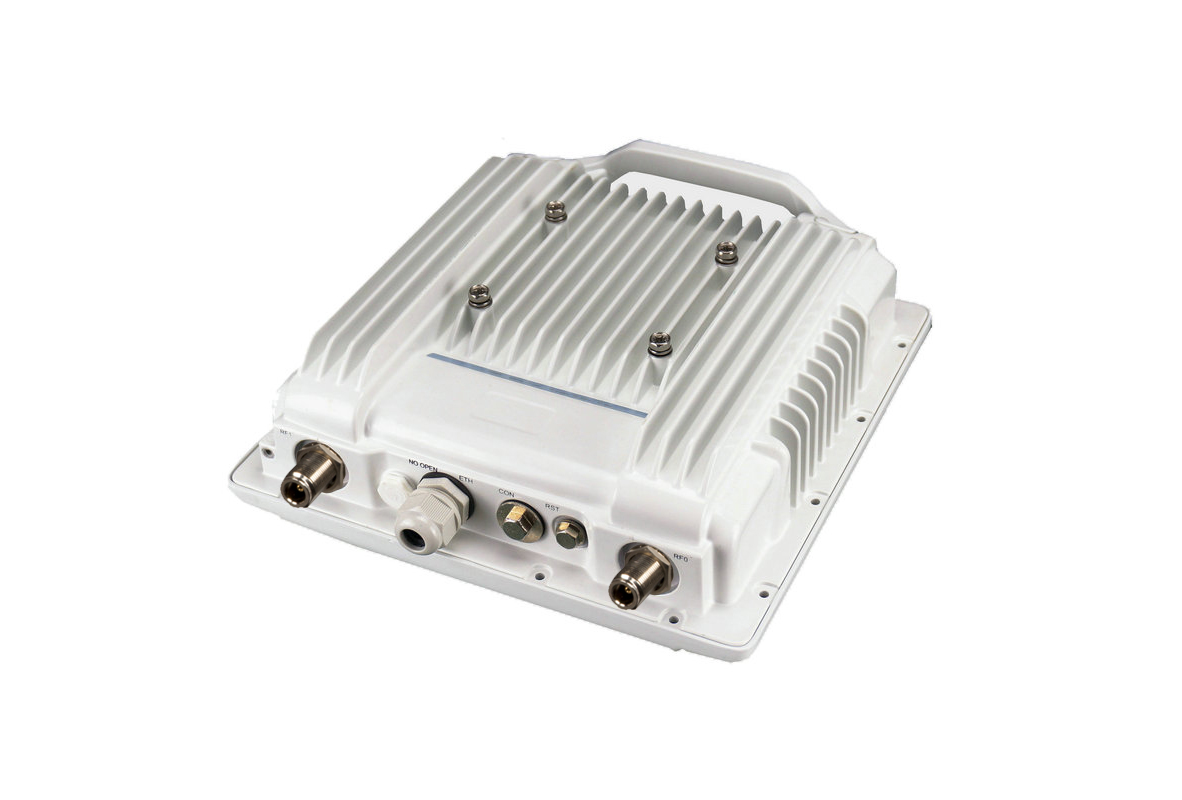
By adopting flexible transmission methods (such as fiber optic + wireless; copper cable + wireless), it is possible to meet the requirements of project monitoring transmission and wireless WiFi coverage in complex environments.
Compared with the costs of labor and construction, the current prices of wireless bridges have an absolute advantage. Generally, a pair costs only a few hundred yuan and a set costs several thousand yuan, yet it can transmit over several hundred meters or even several kilometers. This is incomparable to the high costs of copper cables and optical cables for transmission.
In most wireless transmission projects, we usually ensure that the transmission and the transmitting and receiving ends are visible to each other, and then carry out the site planning based on the actual situation of the project to avoid affecting the transmission quality. However, this does not mean that all projects can be easily planned and implemented. Due to environmental restrictions, some projects that are difficult to implement, such as mountain surveillance, cross-building area surveillance, and water conservancy surveillance, cannot be carried out easily. In such challenging project environments, how can we successfully complete the project construction to ensure its smooth progress?
Four aspects can be considered for analysis:
First, solve the problem of power supply: This is the primary factor to be considered when implementing the high-altitude wireless monitoring project. Due to the uniqueness of the on-site environment, compared to ordinary projects, obtaining electricity at high altitudes is a major challenge and also one of the problems that troubles the engineering clients. Under such circumstances, the solar and wind power generation system can be adopted to solve the problem, thereby meeting the power supply requirements of the wireless monitoring system.
Second, precise transmission distance: The transmission distance is also a crucial factor that cannot be ignored in the wireless monitoring system. This not only relates to how the site is planned and laid out, but also to which equipment the engineering company selects to support the project's transmission system. In this regard, it is recommended that the engineering company comprehensively consider the project's cost budget, equipment performance, and the transmission distance at the site.
Third, accurately plan the relay points: Considering special projects like mountain surveillance, there are usually many obstacles. To ensure the quality of the system's operation, the engineering company can set up relays in some areas that block the view to transfer signals and ensure that the project has a complete network system.
Fourth, take effective measures to prevent lightning strikes, rain and strong winds on high-altitude areas: Climate has a significant impact on outdoor projects, especially for mountain monitoring where climate changes are substantial. If relevant defense measures are ignored, it will often cause huge damage to the system. Therefore, it is recommended that engineering contractors take into account the "three prevention" measures (lightning protection, wind protection, and rain protection) during the project planning phase. They can also adopt deep outdoor transmission network bridges that can withstand adverse weather conditions. This will provide the project with a highly reliable wireless monitoring system.
Therefore, it is recommended that the engineering contractor select the right products, make a proper budget, and implement the "three prevention" measures (lightning protection, wind protection, and rain protection) during the project planning phase, to ensure that the project is prepared with high security.