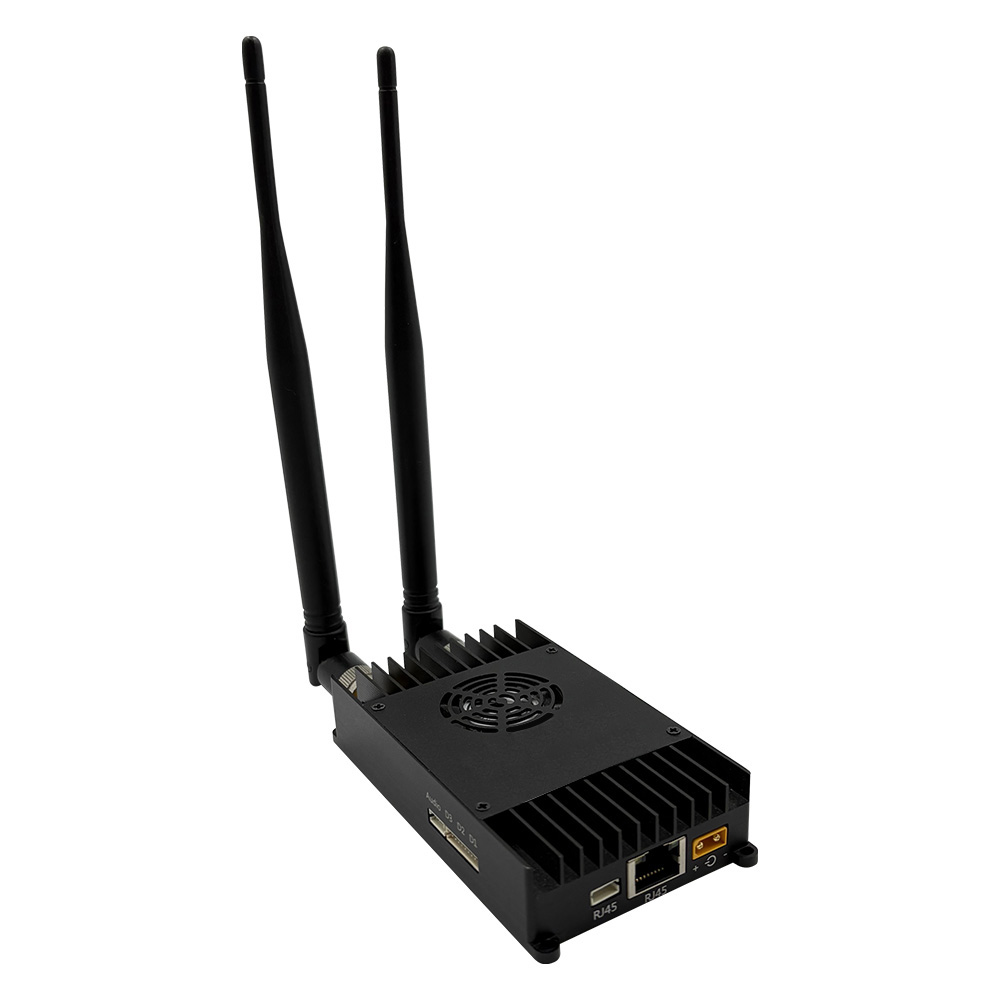


What Is an IP Mesh Radio and How Does It Work?
2025-10-24


In industrial automation, intelligent security systems, smart transportation, and data acquisition applications, peripheral devices play a critical role in data collection, status feedback, and control execution. As system scale expands, traditional wired communication approaches increasingly struggle with flexibility and maintenance costs. Wireless Peripheral Communication System has therefore become an essential component of modern industry communication architectures.
1. Industry Requirements for Peripheral Communication
Most industry applications share common requirements for peripheral communication systems, including:
Widely distributed device locations
Large numbers of communication nodes
Strong scalability
Manageable deployment and maintenance costs
Wireless peripheral communication systems are well suited to meet these demands.
2. Deployment Models of Wireless Peripheral Communication System
Depending on project requirements, Wireless Peripheral Communication Systems are commonly deployed using:
Centralized deployment, where peripherals connect to a single control unit
Distributed deployment, with multiple controllers operating collaboratively
Hybrid deployment models, combining centralized management with localized control
These deployment strategies can be adapted to different project sizes and operational environments.
3. Communication Adaptability in Complex Environments
Industrial and outdoor environments often introduce challenges such as signal obstruction, multipath interference, and device mobility.
Wireless Peripheral Communication Systems address these issues through link quality assessment, adaptive data rate adjustment, and redundant communication designs.
These features enhance system reliability in dynamic and challenging environments.
4. Concurrent Multi-Device Communication Capability
In practical applications, systems often need to manage communication with a large number of peripheral devices simultaneously.
Through efficient scheduling algorithms and address management mechanisms, Wireless Peripheral Communication Systems support concurrent multi-node communication while maintaining real-time performance and minimizing channel collisions.
5. System Security and Operations Management
Security and maintainability are critical considerations in industry applications.
Wireless Peripheral Communication Systems typically support device authentication, data encryption, and access control, while management platforms enable device monitoring, fault diagnosis, and remote maintenance.
This improves overall system security and operational efficiency.
6. Typical Industry Application Scenarios
From an application perspective, Wireless Peripheral Communication Systems are widely used in:
Industrial automation and equipment monitoring
Intelligent security and data acquisition systems
Smart city infrastructure
Field data collection and control networks
In these scenarios, the system provides reliable wireless communication support for core business operations.
7. Summary of Application Value
Overall, Wireless Peripheral Communication System offers a highly flexible and scalable wireless communication solution for industry applications.
As wireless technologies and device management capabilities continue to advance, its application scope and technical depth will continue to expand.
TuQian, a professional wireless communication manufacturer, delivers advanced IP Mesh radios for military, industrial and emergency use. Boasting ultra-low-latency transmission, self-organizing networking, ruggedized design, flexible frequencies and multi-node compatibility, its radios—backed by solid R&D—empower reliable, intelligent wireless networks anytime, anywhere.