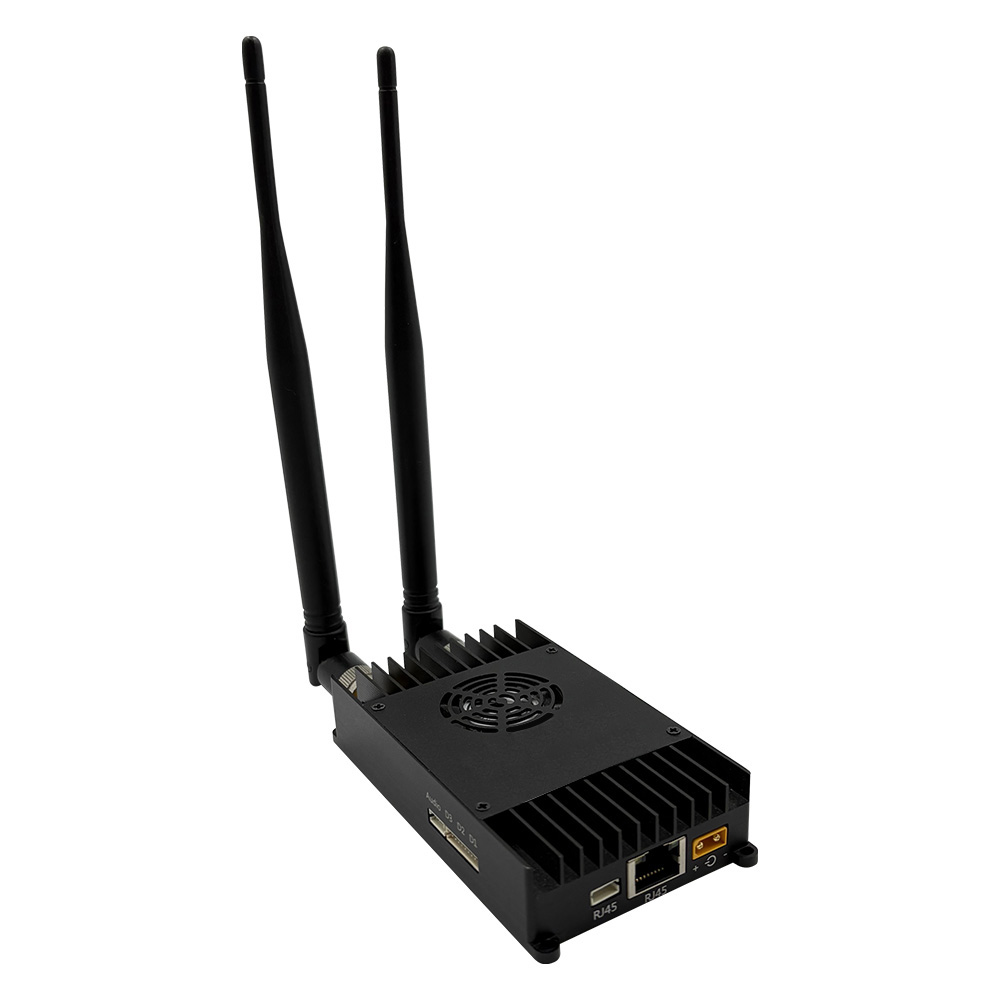


What Is an IP Mesh Radio and How Does It Work?
2025-10-24


As smart cities, intelligent buildings, and modern property management continue to evolve, the demand for elevator monitoring, emergency intercom, advertising display updates, and elevator operation data backhaul is growing rapidly. However, traditional wired deployment often faces challenges such as long construction periods, high cost, difficult installation, and complex maintenance. In particular, in old residential buildings or high-rise structures with complex layouts, installing wired networks is nearly impossible.
For this reason, the Economical Elevator Series was created, offering high cost-performance, easy deployment, and stable wireless transmission, making it the preferred solution for elevator connectivity. This article discusses market needs, the value of elevator wireless communication, application scenarios, and the technological advantages of (TuQian).
1. Why Elevators Urgently Need Wireless Upgrades
With the rapid expansion of elevator digitalization, many property managers and enterprises still face the following challenges:
1. Wired installation is difficult and costly
Elevator structures are enclosed, with limited space and complicated traveling cables, making network cabling difficult.
Routing cables from the control room to the top floor and then to the elevator car requires high labor and material costs.
2. Traditional solutions are hard to implement in old buildings
Older buildings lack weak-current conduits, making wiring impractical.
Property budgets are limited, making large-scale renovations unfeasible.
3. Elevator networking demands are increasing
Modern elevators need to be connected for:
Remote surveillance cameras
Elevator operation status reporting
Fault warning systems
Emergency two-way intercom
LCD advertising content updates
Real-time video/audio streaming
Wireless connectivity has become the most cost-effective and rapidly deployable solution.
2. Core Value of the Economical Elevator Series
The Economical Elevator Series solves three major pain points: low cost, rapid deployment, and strong stability.
1. Truly solves cabling difficulties
Wireless replaces wired connections without construction, conduit routing, or elevator downtime.
Avoids shaft-space limitations and disturbances caused by installation.
2. Much lower cost than traditional wiring
No electrical redesign or expensive traveling cables required.
A single system often covers the entire elevator, ideal for large property deployments.
3. Stable wireless backhaul
Economical does not mean low performance:
Supports HD camera backhaul
Supports real-time advertising content updates
Supports alarms and platform data synchronization
Transmission stability directly determines project quality—this series is optimized for that purpose.
4. Compatible with multiple systems and platforms
Supports multi-protocol access and integration with systems from different vendors
Works with property platforms, advertising networks, and elevator IoT systems
High openness and suitable for city-level elevator supervision platforms
3. Industry Trends: Elevator Networking Moving Toward Digitization and Safety
1. Elevator digital supervision policies drive adoption
Many regions are implementing elevator IoT supervision platforms, enabling:
Real-time fault reporting
Remote alerts for improper door closure, passenger entrapment, etc.
Long-term operational data analysis
Wireless networking is the primary enabling method.
2. Smart buildings require complete network connectivity
Systems like access control, surveillance, elevator linkage, and fire control rely on elevators being continuously online.
3. Advertising operation requires high-speed data transmission
Elevator LCD advertising screens are becoming major urban media channels:
Content must be updated in real time
Stable connectivity ensures smooth playback
Wireless solutions scale quickly across buildings
4. Intelligent property management continues to expand
Property management is shifting from manual operations to digital systems:
Elevator status must be monitored at all times
Abnormalities need instant alerts
Reduces maintenance cost and improves responsiveness
4. Typical Application Scenarios of the Economical Elevator Series
1. Elevator monitoring renovation for old residential communities
No construction required
Fast installation
High cost-efficiency
Supports camera backhaul and elevator status upload
2. Large property groups and new high-rise buildings
Centralized management for multiple elevators
Flexible wireless networking suitable for complex structures
Easy expansion and maintenance
3. Elevator advertising system connectivity
High-speed content updates
Supports real-time monitoring
Reduces operating cost and increases advertising value
4. Special sites: police stations, hospitals, malls, etc.
Higher requirements for real-time transmission and stability
Wireless systems solve multi-vendor compatibility and deployment challenges
5. (TuQian) Advantages in Elevator Wireless Communication
As a professional manufacturer specializing in wireless communication and long-distance transmission, UltraXel’s Economical Elevator Series offers the following advantages:
1. Wireless links optimized for elevator environments
Stable performance inside metal shafts and narrow, enclosed spaces
Strong anti-interference capability ensures high-quality monitoring and data backhaul
2. Fast deployment
“Plug-and-play” setup
Full system installation in minutes
No interruption to daily elevator operation
3. Highly stable transmission
Supports HD video and voice data simultaneously
Low latency and low drop rate
Suitable for emergencies and safety-critical scenarios
4. Ideal for large-scale property deployment
Centralized management
Controllable cost
Suitable for retrofitting hundreds of elevators
5. High reliability and long lifecycle
Industrial-grade design
Resistant to long-term operational stress, temperature/humidity variation, and elevator shaft conditions
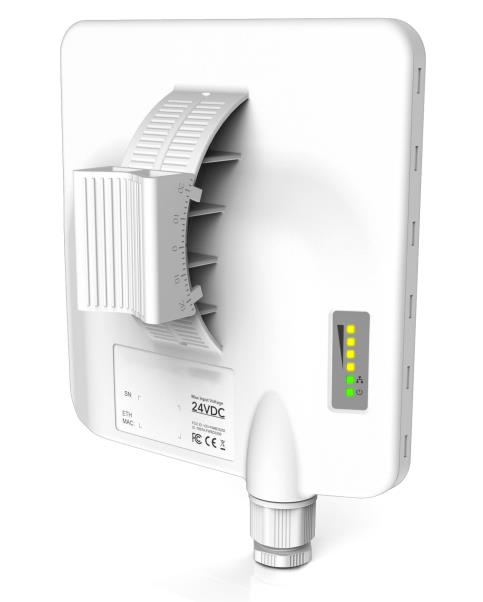
3KM Outdoor Digital Network Bridge TQ-5815AC
Conclusion: Economical Elevator Series — Making Elevators Smarter and Safer Through Wireless Connectivity
Elevator connectivity affects not only building management efficiency but also public safety and the development of smart cities.
Facing challenges such as wiring difficulty, high costs, and increasing digital demands, the Economical Elevator Series—with its cost-effectiveness, rapid deployment, and stable performance—has become the essential choice for old-building upgrades, smart-building construction, and property digital transformation.
The Wireless Network Bridge is a critical component in modern long-distance communication networks. Whether in industrial monitoring, emergency response, UAV communications, remote coverage, or temporary deployment scenarios, wireless bridges deliver a high-performance, reliable, and cost-effective communication solution.
TuQian’s long-distance communication systems are trusted across defense, emergency response, industrial monitoring, and broadcast industries.By combining innovation with field-tested reliability, TuQian empowers organizations to stay connected—anytime, anywhere.