

What Is an IP Mesh Radio and How Does It Work?
2025-10-24


Satellite communication usually uses high frequencies. What are the reasons for this? Today, we will briefly introduce this to you.
The frequency of FM radio broadcasting ranges from 88 to 108 MHz, and its coverage area can extend from several hundred kilometers to several thousand kilometers.
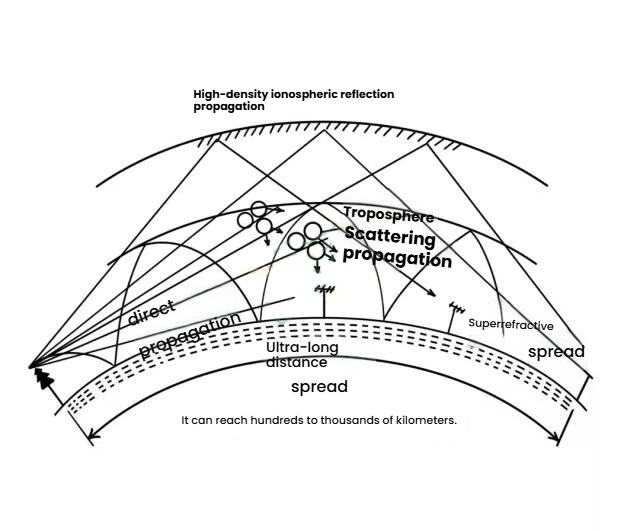
The frequency of the wireless communication cellular network ranges from 400 MHz to 3 GHz, and its coverage area varies from a few kilometers to several tens of kilometers.
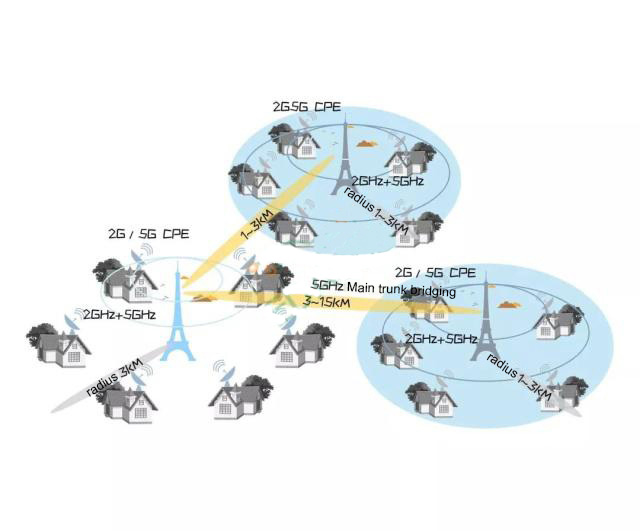
The communication frequency of WiFi networks is 2.4 - 2.5 GHz and 5.2 - 5.8 GHz. The coverage range varies from a few meters to several hundred meters.
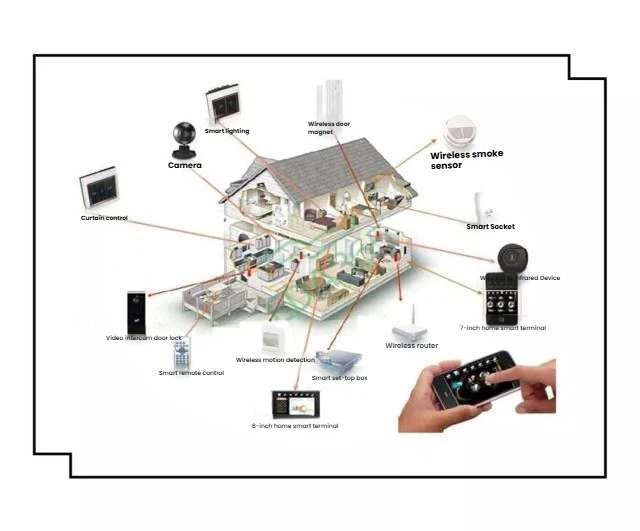
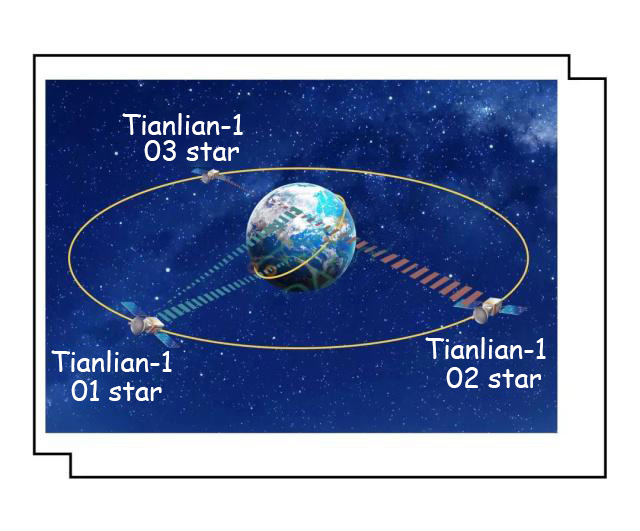
The communication frequency of the satellite ranges from 5GHz to 40GHz, and the communication distance is 36,000 kilometers.
From the above pictures, it can be seen that the lower the frequency of electromagnetic waves, the farther they can travel freely in the air. Then why are satellites so far from the ground yet do not use low-frequency communication? Why can communication with a frequency of 5GHz to 40GHz cover such a long distance (36,000 kilometers)?
To explain this question, we need to understand five aspects of knowledge.
1. The Earth's ionosphere
The ionosphere is an ionized region within the Earth's atmosphere. It extends from about 50 kilometers above the ground to the upper atmosphere of the Earth at an altitude of approximately 1000 kilometers. Within this region, there are a considerable number of free electrons and ions, which can cause radio waves to change their propagation speed, undergo refraction, reflection, and scattering, result in the rotation of polarization planes, and be absorbed to varying degrees.
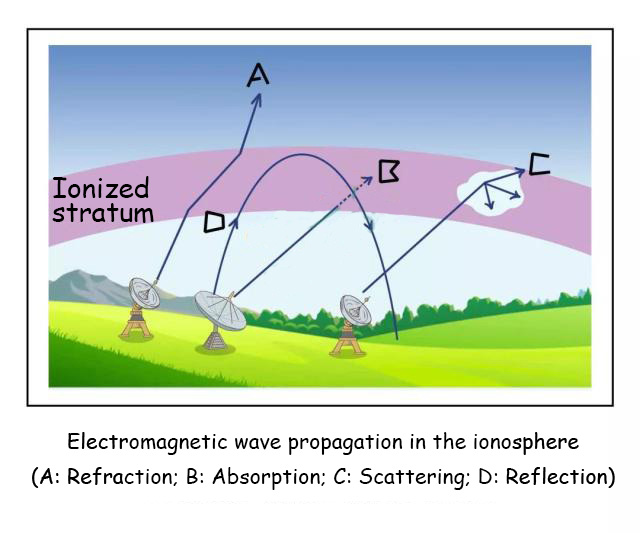
Long waves (B) and medium waves (C) are directly absorbed by the ionosphere and can only be transmitted through ground waves.
Shortwave (D) can be reflected by the ionosphere and can only propagate within the atmosphere below the ionosphere.
Microwave (A) is not affected by the ionosphere and can directly penetrate the ionosphere.
Therefore, satellite communication must use signals with frequencies above the microwave band in order to achieve communication between satellites and the ground.
2. The free-space attenuation of electromagnetic waves
Electromagnetic waves will suffer attenuation when passing through any medium, and therefore there will also be attenuation when electromagnetic waves propagate through the atmosphere.
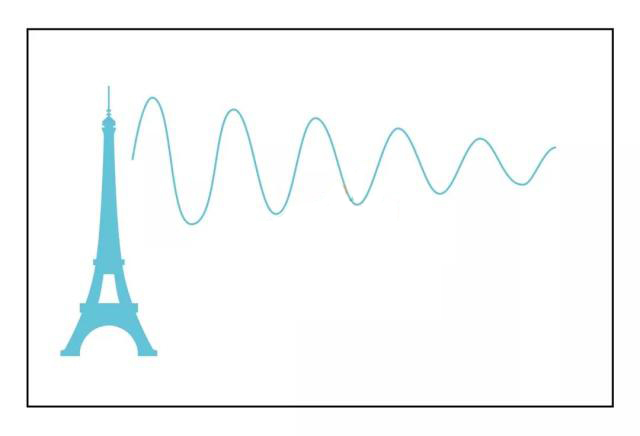
The transmission loss of electromagnetic waves in the free space of the atmosphere is directly proportional to the frequency of the electromagnetic waves and the transmission distance. The formula is as follows:
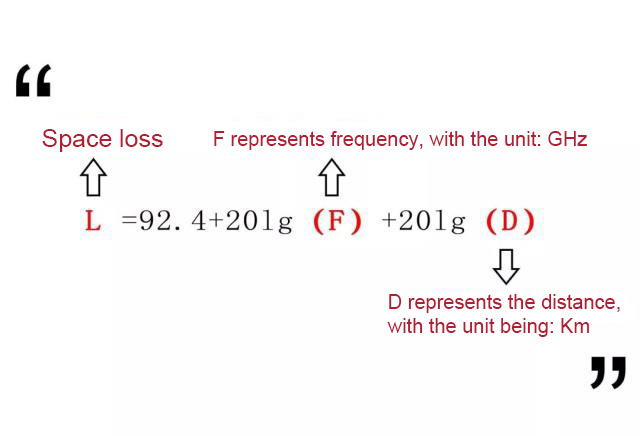
Upon seeing this, I bet you must be thinking in your mind: Look, it's true that the higher the frequency, the greater the space loss. My understanding is correct. But why do satellites still use frequencies above 5GHz for communication? Don't worry, let's keep reading. The third point will answer your questions for you.
3. Wireless communication receiving power link calculation
We all know that a complete wireless communication system consists of a transmitter, an antenna for transmission, a propagation medium, and an antenna for reception, as well as a receiver. Therefore, the amount of useful signals that the receiver can ultimately receive depends on the previous four components.
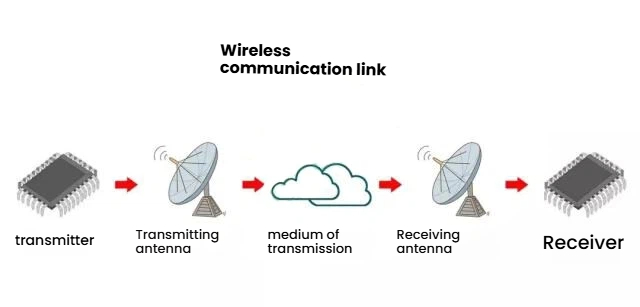
The following are the link calculation formulas for the wireless communication receiving power:
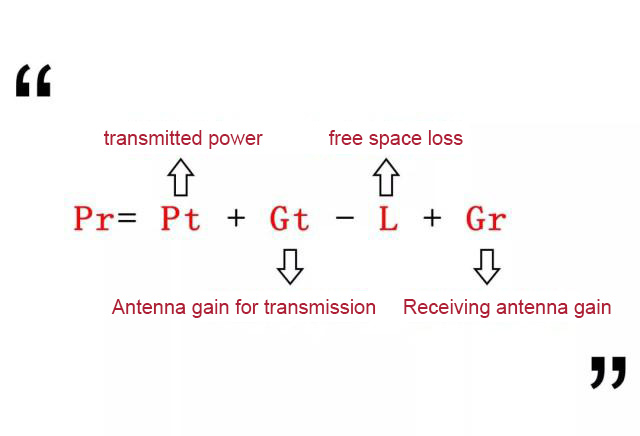
Upon seeing this, you might have already guessed the answer in your minds. Yes, it is possible to compensate for the free-space loss by increasing the antenna gain. But how can this be achieved?
4. High gain antenna
Regarding the knowledge of antennas, we will not go into too much detail here. Instead, we will focus on how to achieve high gain for antennas. We all know that broadcasting and television require multi-to-one communication. Antennas are usually built on mountains or tall buildings to cover more users. Therefore, these antennas are all omnidirectional antennas. They emit electromagnetic waves in all directions, and the wider the dispersion of the electromagnetic waves, the faster the energy consumption.
So, what if we gather these scattered electromagnetic waves and emit them in one direction?
Yes, if the antenna can be designed to emit signals in only one direction, then the antenna gain will be significantly enhanced. This is how directional high-gain antennas come into being.
Introduce a classic type of directional high-gain antenna, the Cassegrain antenna, also known as the parabolic antenna:
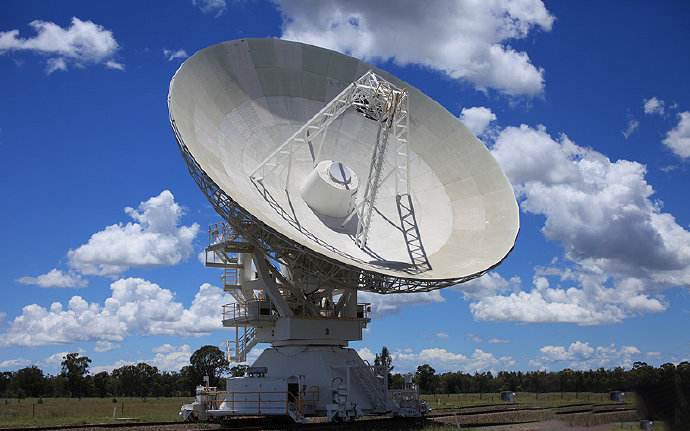
The direct formula for its empirical calculation is as follows:
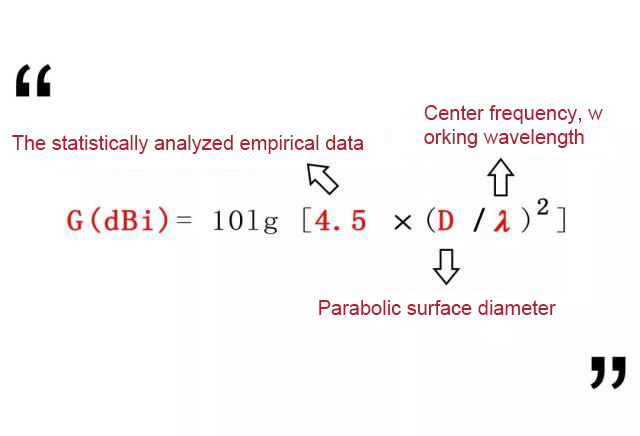
From this formula, we can draw the conclusion that:
For parabolic antennas of the same size, when the operating frequency doubles, the antenna gain will increase by 6 dB!
Interested readers can do the calculation themselves and see if it makes sense?
At this point, let's do a simple calculation:
First, state the conditions
Communication distance between heaven and earth:
Geostationary orbit = 35,786 kilometers.
Round off D = 36,000 km Communication frequency:
Dimensions of 3GHz and 30GHz transmitting-receiving antennas:
All were designed as parabolic antennas with a diameter of 10 meters.
transmitted power:
100W=50dBm
Then, the calculation began.
01. First, calculate the free-space attenuation
· Since it is in GHz frequency
· So substitute into the formula
L=92.4+20lg(F)+20lg(D)· Assume the distance between the satellite and the ground is D = 36,000 km; · Calculate the spatial attenuation at 3 GHz respectively:
L3=92.4 +9.5+91.1=193
· 30 GHz spatial attenuation:
L30=92.4+29.5+91.1=213
02. Calculate the gain of the transmitting and receiving antennas
· The calculation formula for the parabolic antenna is given in decibels relative to the ideal point (dBi).
· Calculate separately:
· The wavelength of 3GHz is 0.1 meters.
· Then the antenna gain is:
Gt3
= Gr3
= 10 lg [4.5 x (10/0.1)2]
= 46.5
· The wavelength of 30GHz is 0.01 meters.
· Then the antenna gain is:
Gt30
= Gr30
= 10 lg [4.5 x (10/0.01)2]
= 66.54
03. Calculate the actual link power
· Received power by the receiver:
put into equation Pr=Pt+Gt-L+Gr,
· transmitted power
Pt=100W=50dBm· Then, the values can be calculated separately.
· 3GHz Signal power received by the receiver:
Pr3
= 50dBm + 46.5 - 193 + 46.5
= -50dBm· 30GHz Signal power received by the receiver:
Pr30
= 50dBm + 66.5 - 213 + 66.5
= -30dBm
The result is very clear:
Without taking into account factors such as weather conditions (like rain, or cloudy days with thick clouds), the higher the frequency of the wireless link, the higher its efficiency!
5. High frequency, large bandwidth, high speed rate
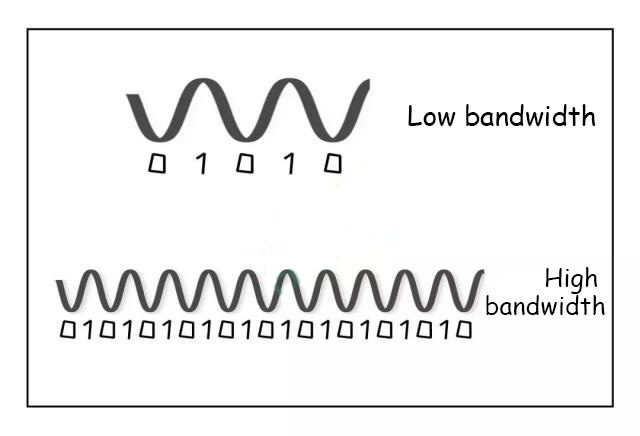
Satellites in space need to rely on batteries for power, and the battery energy is limited. Therefore, shortening the communication time is a good way to save battery energy. Under the condition where the amount of information to be transmitted remains constant, to shorten the communication time, it is necessary to increase the transmission rate. Then, how to increase the transmission rate? Grandpa Shannon pointed us in the right direction: Increasing the communication bandwidth can increase the information transmission rate.
High bandwidth can carry more information.
On Earth, the radio frequency bands below 5G have already been occupied by various communication devices, making it impossible to allocate a large and uninterrupted bandwidth for satellite communication. However, the frequency bands above 5G still have relatively complete spectrum resources. Therefore, satellite communication opts for frequencies above 5G to facilitate data transmission.
Summary: Alright! I've been rambling on for so long above. I wonder if you understood it...
In conclusion, from this, we can conclude that the reason why satellites use frequencies above 5GHz is as follows:
◆ Can pass through the ionosphere smoothly, without being reflected or absorbed
◆ High-frequency transmission, supported by high-gain antennas, does not result in significant power loss.
◆ High frequency indicates a large bandwidth. According to Shannon's formula, the wider the bandwidth, the higher the information transmission rate. This is beneficial for saving energy and extending the service life of satellites.
◆ Above 5G, there are relatively complete spectrum resources that are less likely to be interfered with.