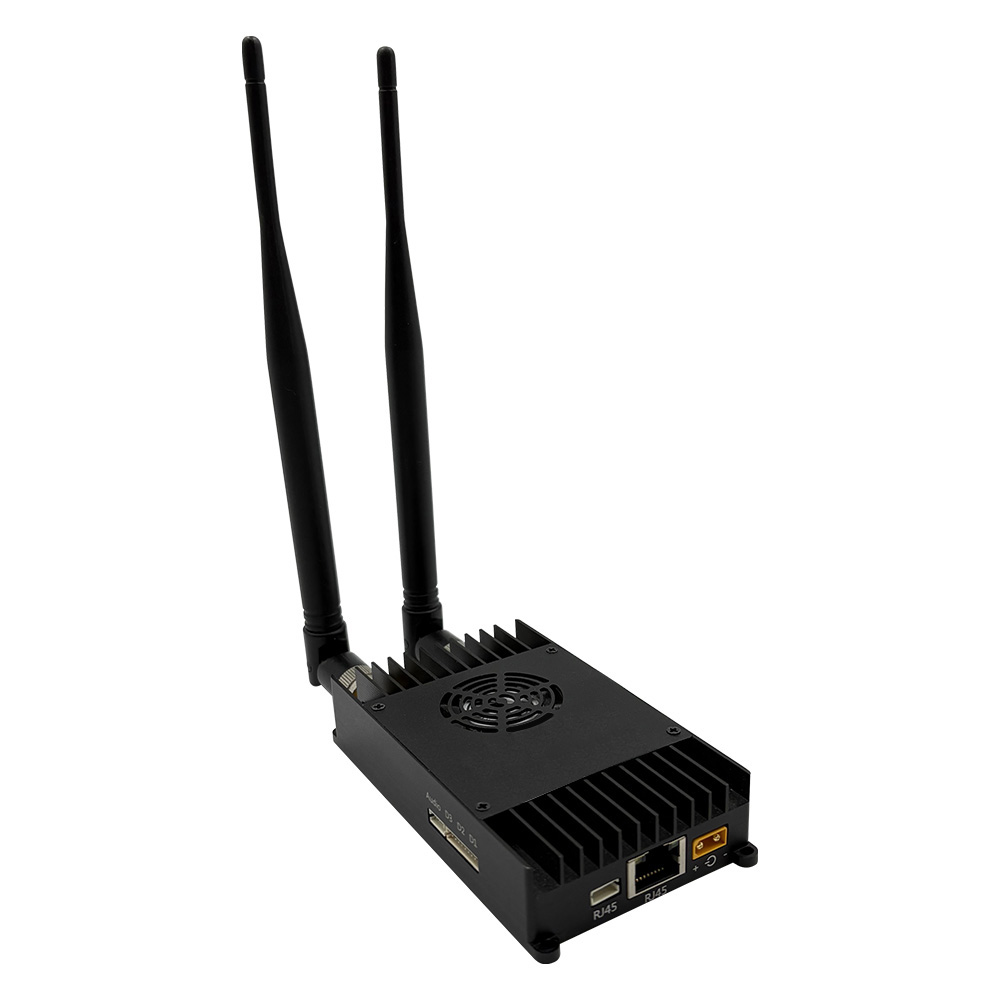


What Is an IP Mesh Radio and How Does It Work?
2025-10-24


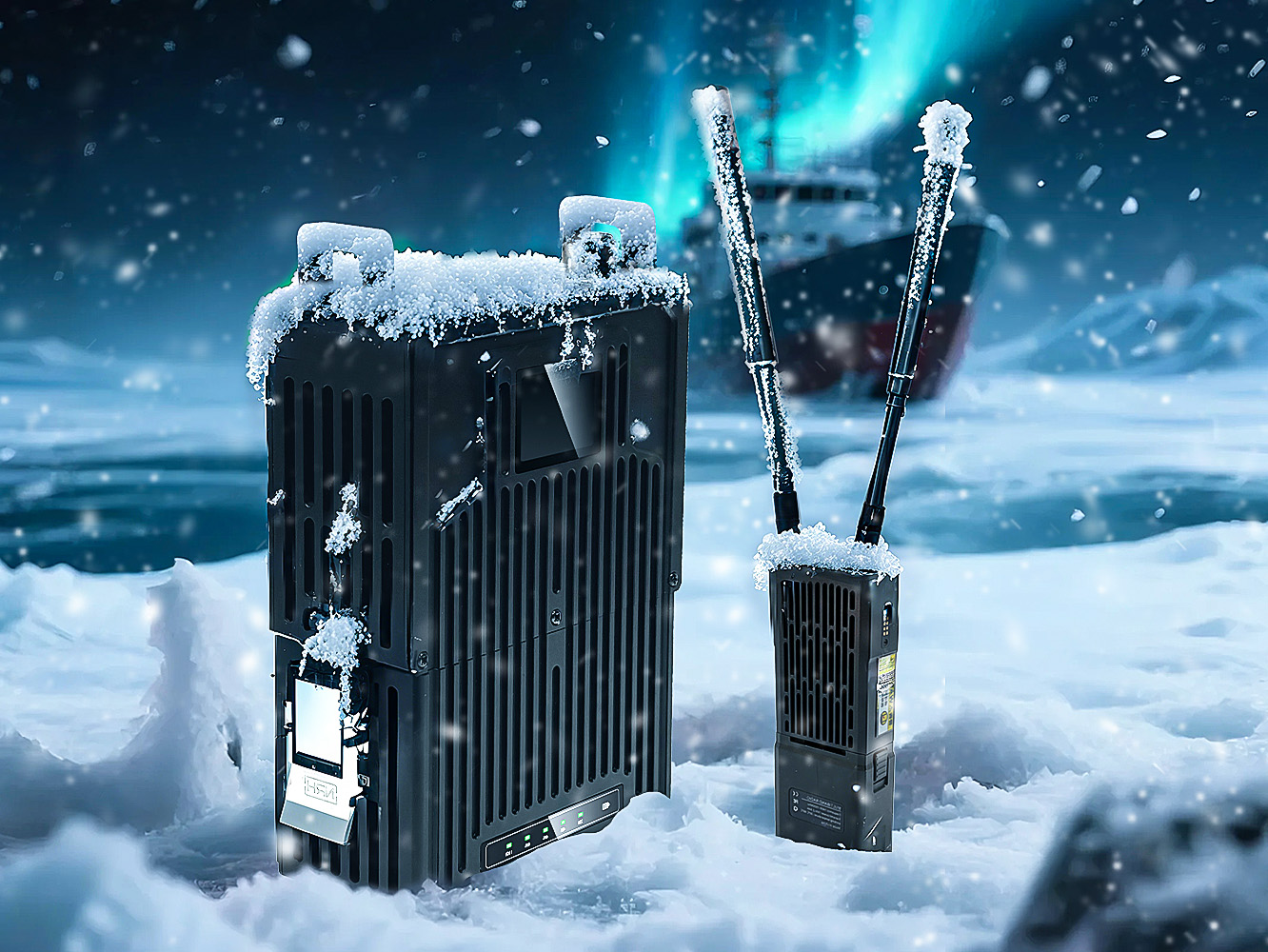
In modern wireless communication systems, the use of specialized antennas to improve IP Mesh communication distance has become a key technology affecting network coverage. In complex environments or long-distance deployment scenarios, relying solely on the device's own transmission capability is often insufficient. Optimizing the antenna system can significantly enhance signal quality and communication stability, thereby extending the effective coverage of the entire network.
This technology is widely used in public safety communications, industrial monitoring, emergency rescue, temporary communication network deployment, and other fields.
In wireless networks, data transmission quality depends not only on device performance but also on signal propagation efficiency. The role of the antenna is to determine "how far and how stable" the wireless signal can go.
Compared to ordinary built-in antennas, specialized wireless antennas can more effectively control signal direction and energy distribution, reducing ineffective radiation and improving effective communication distance.
Simply put, the more professional the antenna, the more "concentrated" the signal, and the stronger the network coverage.
Specialized wireless antennas improve IP Mesh communication distance mainly through the following methods:
Concentrating wireless signal energy in a specific direction
Improving transmission and reception efficiency
Reducing signal loss caused by environmental interference
Enhancing long-distance signal recognition
In practical engineering applications, increasing antenna gain often significantly improves link stability, especially in multi-hop network structures where the signal quality of each hop affects the overall communication distance.
Wireless Mesh communication distance is not a fixed value but is determined by multiple factors:
| Factor | Impact Description |
Antenna gain | Higher gain means stronger signal propagation capability |
Line of sight | Unobstructed line of sight directly affects stability |
Installation height | Higher height reduces obstruction impact |
Operating frequency band | Lower frequency bands provide better propagation |
Environmental interference | More interference results in shorter communication distance |
In actual deployment, these factors usually need to be considered comprehensively rather than optimizing a single item in isolation.
In real-world environments, wireless Mesh communication distance is affected by terrain, buildings, weather, and device layout.
For example, in open areas, using directional antennas can significantly improve connection stability between nodes. In urban or industrial environments with many obstructions, adding relay nodes is often necessary to ensure network continuity.
Therefore, system design typically combines antenna optimization with network topology planning to achieve stable coverage.
In practical engineering, one of the most effective ways to increase communication distance is to use directional or high-gain antennas.
Common optimization methods include:
Accurately aligning the communication direction to reduce signal deviation
Raising antenna installation height to avoid obstacles
Keeping nodes as unobstructed as possible from each other
Using matched antenna types consistently
Proper installation is more important than simply replacing equipment, because a directional deviation of just a few degrees can significantly affect communication quality.
Depending on the scenario, different types of specialized antennas can be selected:
Omnidirectional antenna: Suitable for short-distance, multi-node coverage
Directional panel antenna: Suitable for medium-distance stable connections
High-gain directional antenna: Suitable for long-distance point-to-point communication
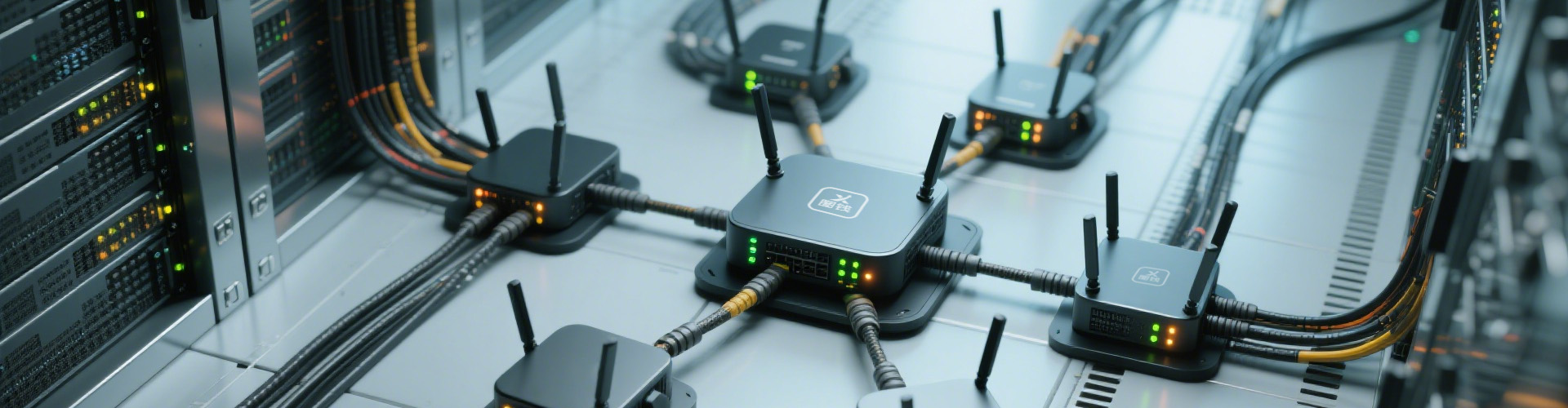
In professional Mesh systems, different antennas are often mixed according to the network structure to balance coverage and stability.
In actual deployment, incorrect antenna selection or installation angle deviation can lead to link interruption or reduced transmission rate. tqwifi provides professional antenna customization and supporting services for IP Mesh systems:
Frequency band matching & measurement: For common Mesh bands such as 1.4GHz / 2.4GHz / 5.8GHz, tqwifi offers measured matching antennas with key parameters including gain, VSWR, and radiation pattern.
Installation alignment guidance: tqwifi technical team provides installation angle calculation and alignment tool recommendations to avoid communication distance degradation caused by direction deviation.
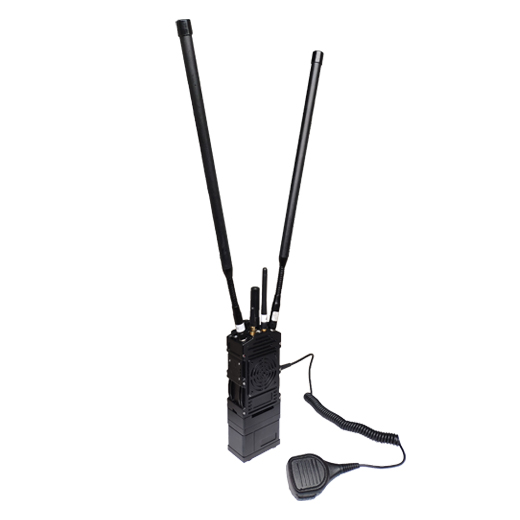
System integration support: Can be combined with tqwifi backpack Mesh radios, vehicle antenna mounts, and solar-wind hybrid power supply systems to meet long-distance stable deployment needs in the field.
Contact tqwifi to get your IP Mesh communication distance optimization solution.
Specialized wireless antennas play a decisive role in IP Mesh communication systems. By optimizing antenna gain, directionality, and installation methods, communication distance and link stability can be significantly improved.
In practical engineering applications, communication performance depends not only on the equipment itself but also on overall system design, including antenna selection, node layout, and environmental planning. With proper configuration, even in complex environments, longer and more stable wireless communication can be achieved.
Q1: Why can specialized wireless antennas improve communication distance?
A1: Because they concentrate wireless signal energy, reduce dispersion loss, improve effective transmission efficiency, and thereby extend communication distance.
Q2: Is higher antenna gain always better?
A2: Not necessarily. Although high-gain antennas can increase distance, they require higher installation precision and directional accuracy, and need to be properly matched to the usage scenario.
Q3: What mainly affects IP Mesh communication distance?
A3: It is mainly affected by multiple factors including antenna, line-of-sight conditions, environmental interference, and node layout.