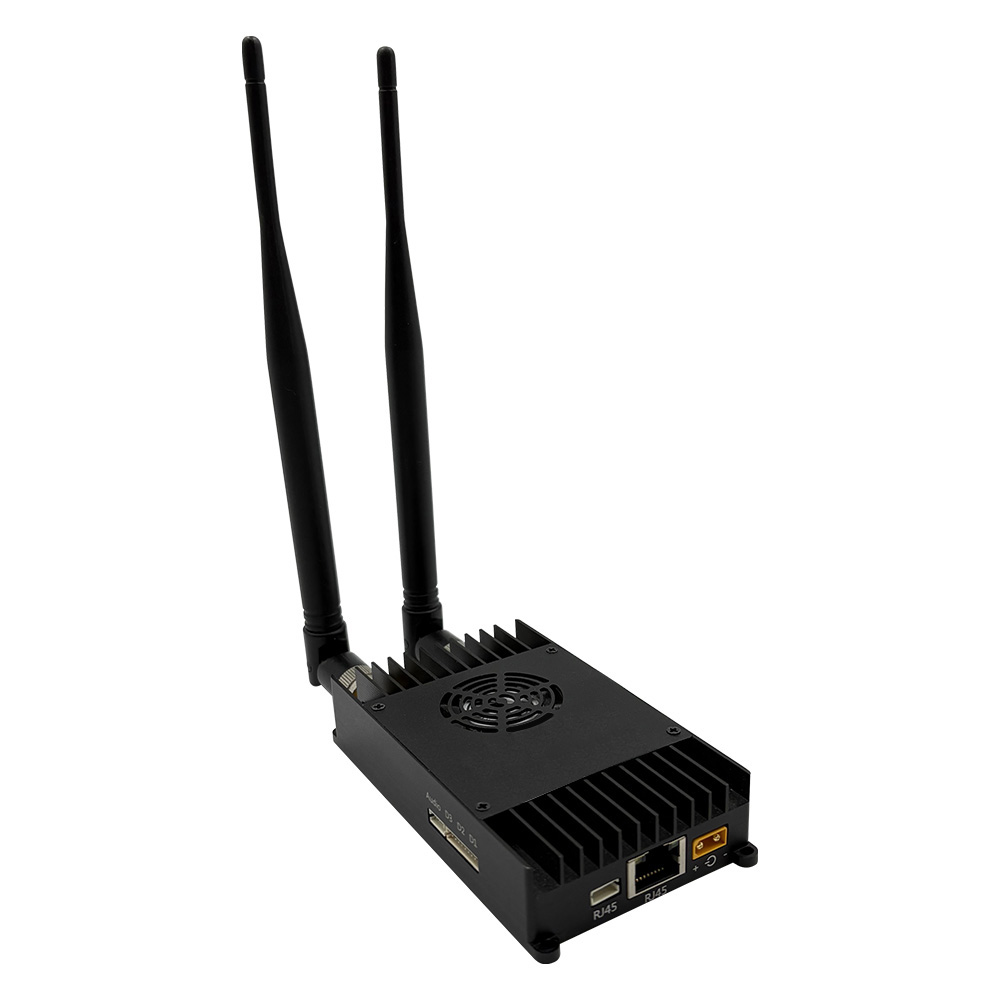


What Is an IP Mesh Radio and How Does It Work?
2025-10-24


In remote, mountainous, or complex terrain environments where laying fiber optic cables is impractical or too costly, microwave transmission has become a reliable and widely adopted wireless communication solution. It enables long-distance data transfer between two points without physical cabling, supporting use cases from communication base station backhaul to video surveillance and emergency communications.
This guide explains how microwave transmission works, its core applications, key comparisons with other technologies, and practical tips for stable deployment.
Microwave transmission is a line-of-sight wireless communication technology that uses high-frequency radio waves (typically in the GHz range) to transmit voice, video, and data signals between two fixed locations.
Each deployment requires two transceivers: one at each end of the link. These devices send and receive signals along a direct path. The system operates within regulated frequency bands, balancing bandwidth, range, and environmental adaptability.
No physical cabling required – ideal for hard-to-wire locations
Long transmission range – can cover several kilometers (depending on equipment and conditions)
High bandwidth support – suitable for video and data-heavy applications
Fast deployment – significantly shorter setup time compared to fiber
Recommended Device:
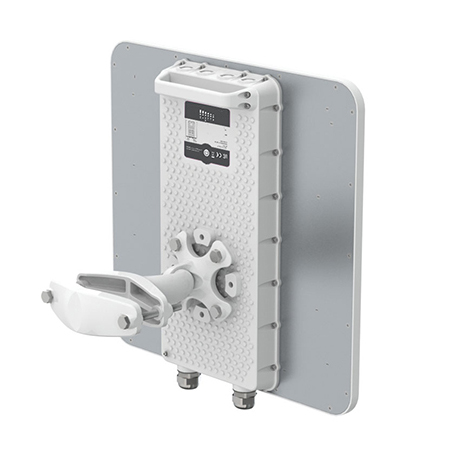
For long-distance, high-stability microwave links, we recommend the TQ-5823AC 100km Long-Range Gigabit Wireless Bridge.
IP67-rated, 866Mbps throughput, ideal for mountain/island/base station backhaul
Microwave transmission is widely used across industries where stable, long-distance wireless links are needed.
Mobile network operators rely on microwave transmission to connect remote base stations to the core network, especially in areas where fiber is unavailable or too expensive to deploy.
Recommended Solution:
Public Security/Armed Police/Firefighting/Maritime Solution
In large-scale projects such as forest monitoring, construction site security, or remote area surveillance, microwave transmission sends high-definition video signals from cameras back to the central monitoring room.
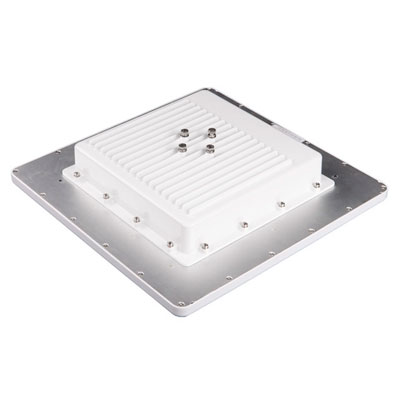
Recommended Device:
Factories, mining sites, and oilfields use microwave transmission to connect distributed production facilities, IoT sensors, and control systems without running long cables.
During natural disasters, temporary events, or emergency deployments, microwave transmission provides quick, stable links for command centers and field teams.
In remote villages or isolated islands, microwave transmission delivers internet and voice services to areas unreachable by traditional wired infrastructure.
Choosing the right wireless communication solution depends on your project environment, budget, and stability requirements.
Technology | Advantages | Limitations | Best Use Cases |
Microwave Transmission | No cabling, long range, fast deployment, high bandwidth | Requires line-of-sight, affected by weather/obstacles | Base station backhaul, long-range surveillance, hard-to-wire sites |
Fiber Optic | Extremely stable, high capacity, low interference | High cost, slow deployment, fixed infrastructure | Permanent urban networks, high-speed data centers |
Wireless Bridge | Low cost, easy setup, suitable for short distances | Limited range, lower bandwidth | Small campus coverage, short-range building-to-building links |
A reliable microwave transmission link depends on proper planning and installation. Here are key considerations:
The most critical factor is an unobstructed direct path between the two antennas. Trees, buildings, and terrain can block or weaken the signal.
Different bands balance range, bandwidth, and resistance to interference. Higher frequencies support more data but are more easily blocked by obstacles.
Antennas should be mounted high enough to avoid obstructions, with precise alignment to maximize signal strength.
Rain, fog, and extreme temperatures can affect signal quality. Select equipment with appropriate weather resistance and margin in signal strength.
Regular signal checks and firmware updates help ensure long-term stability, especially in harsh outdoor environments.
TuQian provides microwave transmission equipment and solutions optimized for complex terrain and remote deployments. Key features include:
Ruggedized, weather-resistant design for outdoor use
High-gain antennas for improved signal strength and range
Remote monitoring and configuration capabilities
Certified performance under extreme temperatures and humidity
For detailed specifications or custom microwave transmission solutions for your project, refer to official documentation orcontact the TuQian technical team for support.
Microwave transmission is a proven, practical solution for long-distance wireless communication in scenarios where fiber optic cables are not feasible. It offers the flexibility, speed, and performance needed for base station backhaul, surveillance, industrial networks, and emergency communications.
By understanding its characteristics, applications, and deployment best practices, you can build stable, cost-effective links tailored to your project requirements.
Q1: What is the maximum range of microwave transmission?
A1: Range depends on equipment, frequency band, antenna gain, and line-of-sight conditions. In ideal environments, links can cover several kilometers or more.
Q2: Does weather affect microwave transmission?
A2: Yes. Heavy rain, fog, and other conditions can cause signal attenuation. Proper planning and equipment selection can reduce this impact.
Q3: Can microwave transmission support high-definition video?
A3: Yes. Modern microwave systems offer sufficient bandwidth to support multiple HD or even 4K video streams.
Q4: Is line-of-sight always required?
A4: Most microwave transmission systems require a clear line-of-sight between antennas for optimal performance.
Q5: How long does it take to deploy a microwave transmission link?
A5: Deployment is typically much faster than fiber optic installation, often completed in days rather than weeks, depending on site conditions.