

What Is an IP Mesh Radio and How Does It Work?
2025-10-24


In modern wireless network deployment, Point-to-Multipoint (PtMP) wireless bridges are widely used in enterprise campuses, factories, schools, and agricultural monitoring systems. By connecting multiple remote sites through a single central base station, PtMP architecture significantly reduces cabling costs while improving network scalability and management efficiency.
Compared with traditional point-to-point connections, PtMP wireless bridge systems offer better resource utilization and scalability. So how exactly do they improve wireless network performance? This article explains the principles, optimization methods, and application scenarios in detail.
The core concept of a PtMP network is “one central point, multiple access points.”
A typical PtMP wireless bridge system includes:
One central base station
Multiple remote access devices
Directional or sector antennas
Routers or network switches
The central base station is responsible for transmitting signals, allocating bandwidth, and managing all remote nodes. Remote devices receive the signal and connect local networks back to the main network.
Multiple devices share the same wireless channel, while the base station centrally schedules resources. This reduces spectrum waste and increases overall network throughput.
The system can dynamically allocate bandwidth based on service priority, such as:
Prioritizing video surveillance traffic
Ensuring low latency for industrial control
Queueing general data traffic
Using sector antennas or directional antenna design reduces signal overlap and co-channel interference, improving signal-to-noise ratio (SNR).
New devices can be added simply by connecting additional remote nodes without redesigning the main link, resulting in lower expansion costs.
Technology | Function |
Sector Coverage Design | Divides coverage into multiple sectors to reduce interference and increase capacity |
TDMA Scheduling | Allocates transmission time slots to avoid data collisions |
QoS Bandwidth Management | Prioritizes critical traffic to ensure stable transmission |
Beamforming Technology | Focuses wireless signals toward target devices to improve strength and stability |
Increased number of nodes increases scheduling complexity
Buildings and trees may block signals
Longer distances lead to higher signal attenuation
Co-channel interference reduces stability
Conduct site surveys in advance to avoid coverage blind spots.
Reducing physical obstructions improves coverage range and signal quality.
Avoid overloading a single base station.
Reduce interference and improve network stability through proper frequency planning.
Enable unified connectivity and management across multiple buildings.
Support real-time communication for production and monitoring systems.
Connect sensors, cameras, and control systems across large outdoor areas.
When deploying a Point to Multipoint Wireless Bridge, TQWIF provides a one-stop solution covering site survey, sector antenna selection, and bandwidth optimization.
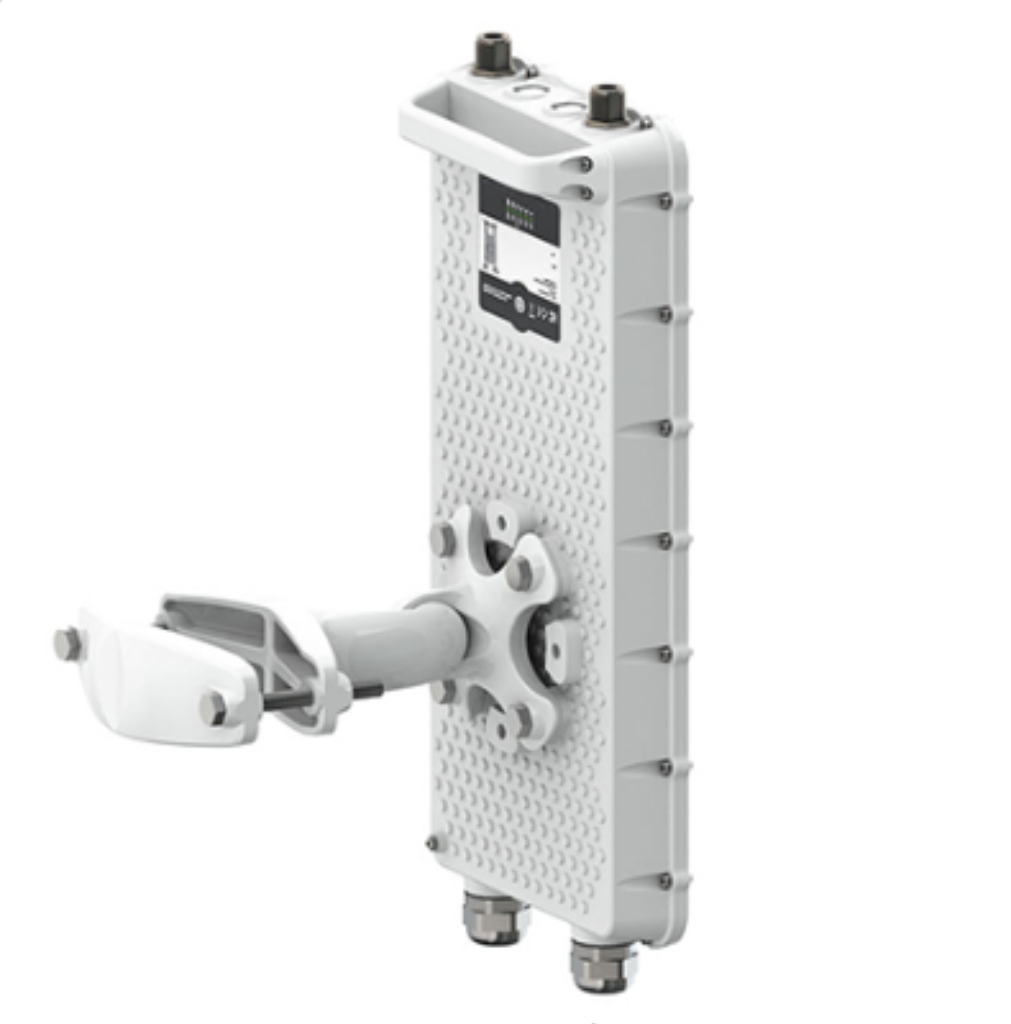
Core capabilities include:
Industrial-grade wireless bridge devices supporting 2.4GHz/5GHz dual-band and TDMA scheduling
Sectorized coverage design for campuses, factories, farms and other scenarios to reduce co-channel interference
Certifications including ISO9001, CE, RoHS; equipment withstands high/low temperature, humidity, and vibration
Can be combined with solar-wind hybrid power supply systems for unattended operation in remote locations
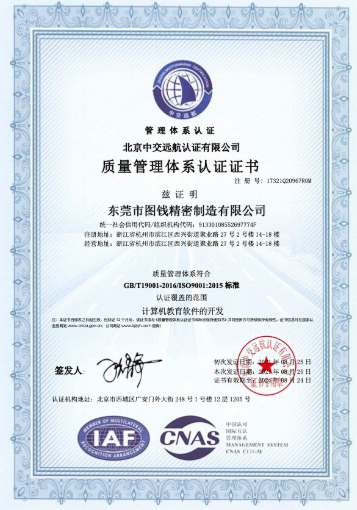
ISO 9001 Certification Certificate
If you need a point-to-multipoint wireless bridge solution for your corporate campus, factory, or outdoor surveillance network, please contact us or click here. Our technical team provides topology planning, on-site survey, and deployment support.
Q1: What scenarios are suitable for PtMP wireless bridges?
A1: They are suitable for enterprise campuses, factories, schools, farms, and outdoor surveillance systems requiring multi-site connectivity.
Q2: Does PtMP affect network speed?
A2: Bandwidth is shared among all nodes. Performance may decrease with excessive nodes, but proper planning ensures stable performance.
Q3: How far can a wireless bridge transmit?
A3: In clear line-of-sight conditions, it can reach several kilometers or more, depending on equipment and environment.
Q4: Is professional installation required?
A4: Yes, professional installation is recommended, especially for antenna alignment and site surveying, which significantly impact performance.
Q5: Can more devices be added later?
A5: Yes, scalability is one of the main advantages of PtMP systems. New remote nodes can be added easily.