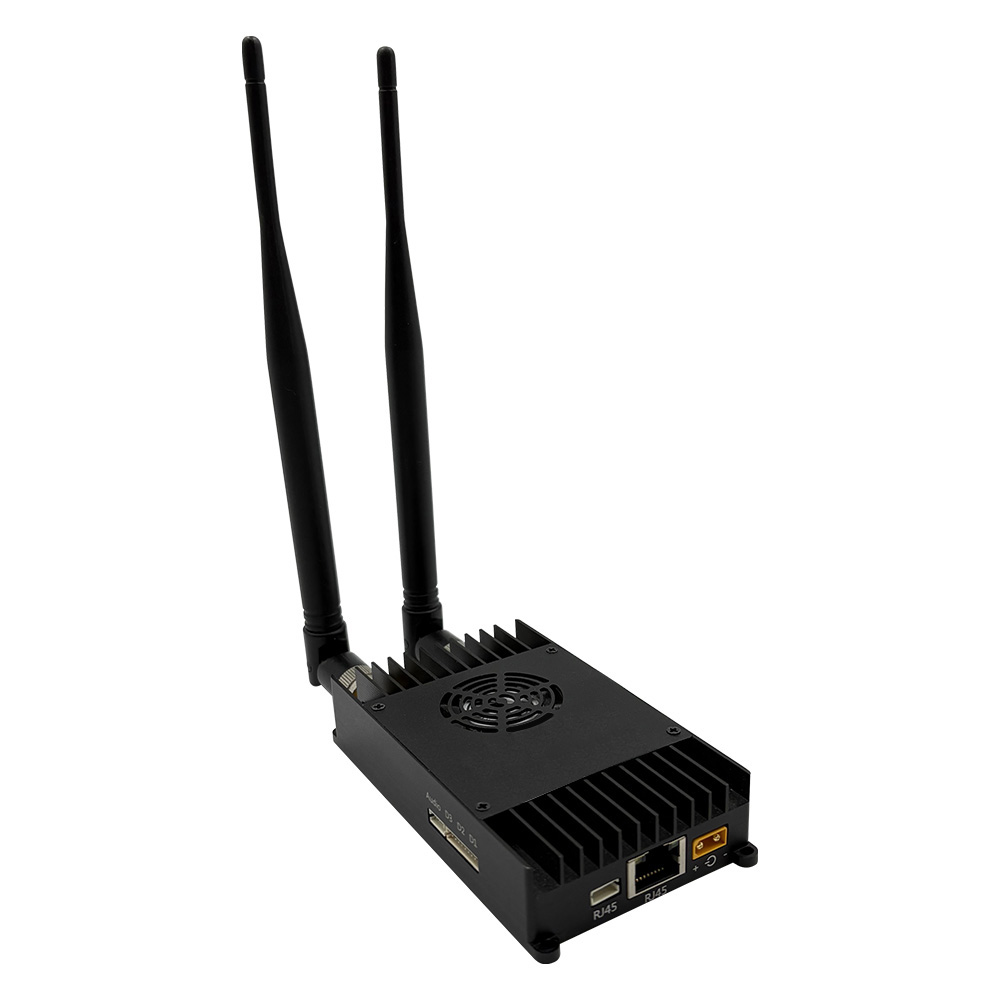


What Is an IP Mesh Radio and How Does It Work?
2025-10-24


As communication networks expand into remote areas such as mountains, deserts, islands, and remote frontier regions, providing stable power for remote base stations has become a key challenge for the telecommunications industry. In these areas, traditional grid power often involves high construction costs, difficult installation, or is simply unavailable.
A solar-wind hybrid power supply system, which combines solar and wind energy to deliver consistent power, is gradually becoming an important solution for powering remote base stations.
Many communication base stations are deployed far from cities, for example:
Mountain communication towers
Desert surveillance stations
Island communication systems
Remote security sites
Temporary emergency communication platforms
These areas often lack stable grid power. Traditional power supply methods require laying long-distance cables, which is complex and costly. Therefore, solar-wind hybrid power solutions for remote base stations have become a more economical and efficient choice.

Solar-wind hybrid systems combine solar and wind power generation. Compared to traditional power supply methods, they offer better stability and cost-effectiveness for remote base station deployment.
Advantage | Description |
Stable Power Supply | Solar power by day, wind power at night or on cloudy days, enabling reliable 24/7 power supply under normal conditions |
Reduced Construction Costs | Eliminates long-distance grid cable laying, lowering civil works and installation expenses |
Environmentally Friendly | Uses renewable energy, reducing carbon emissions and noise from diesel generators |
Low Maintenance Cost | Automated systems with remote monitoring; reduced maintenance frequency vs. diesel generators |
Flexible Deployment | Suits complex environments like mountains, islands, and remote frontiers; relatively fast installation |
Unattended Operation Support | Enables remote monitoring and smart management, ideal for long-term unattended base stations |
Compared to traditional diesel generator systems, solar-wind hybrid power supply systems are better suited for long-term outdoor operation, especially for communication base stations, security surveillance, and emergency communications.
Solar power is most efficient during the day, while wind power can operate at night or on cloudy/rainy days. This complementary model addresses the instability of single-source renewable energy.
Daytime: Solar power supplies equipment and charges the battery
Nighttime: Wind power and the battery jointly supply power
Cloudy/rainy weather: The wind system supplements energy output
Solar Panels – Convert sunlight into electricity; main daytime energy source
Wind Turbine – Generates power from wind; operates without sunlight
Storage Battery – Stores excess energy for low wind/sunlight periods
Intelligent Controller – Automatically balances power from solar, wind, battery, and loads
Communication Base Stations – Long-term stable power for remote communication equipment
Video Surveillance Systems – Suitable for off-grid areas like forests, remote frontiers, and construction sites
Emergency Communications – Rapid network setup during natural disasters or temporary missions
Industrial Internet of Things – Powers remote sensors, monitoring devices, and wireless terminals
TuQian provides integrated new energy power and wireless transmission solutions for remote base stations, security surveillance, emergency communications, and more. Core capabilities:
Custom solar-wind hybrid power supply systems optimized for combined solar and wind input
100Ah maintenance-free solar batteries with fully sealed construction
Supports 5G equipment, wireless bridges, and mesh devices for all-in-one power + communication deployment
Products tested for extreme conditions: temperature, humidity, salt spray, vibration
Certified: ISO9001, CE, RoHS
For solar-wind hybrid power and communication solution evaluations, refer to official documentation or contact the TuQian technical team for support.
Solar-wind hybrid power supply systems deliver a stable, eco-friendly, and cost-effective off-grid power solution for remote base stations.
By combining solar and wind energy, these systems support long-term stable operation in off-grid environments, ideal for communication base stations, security surveillance, emergency communications, and similar applications.
As renewable energy technology matures, solar-wind hybrid power supply systems will play a growing role in future remote communication infrastructure.
Q1: What is a solar-wind hybrid power supply system? A1: A renewable energy solution combining solar and wind generation for continuous, stable power to off-grid equipment.
Q2: Why are remote base stations suitable for solar-wind hybrid systems? A2: Remote areas lack stable grid power; hybrid systems reduce cabling costs and enable long-term off-grid operation.
Q3: Can the system work on cloudy or rainy days? A3: Yes. The battery and wind turbine provide power when sunlight is limited.
Q4: Is maintenance of a solar-wind hybrid system complicated? A4: Less maintenance than diesel generators, with lower long-term operating costs.
Q5: Which industries mainly use solar-wind hybrid systems? A5: Communication base stations, security surveillance, Industrial IoT, remote monitoring, emergency communications, and related fields.