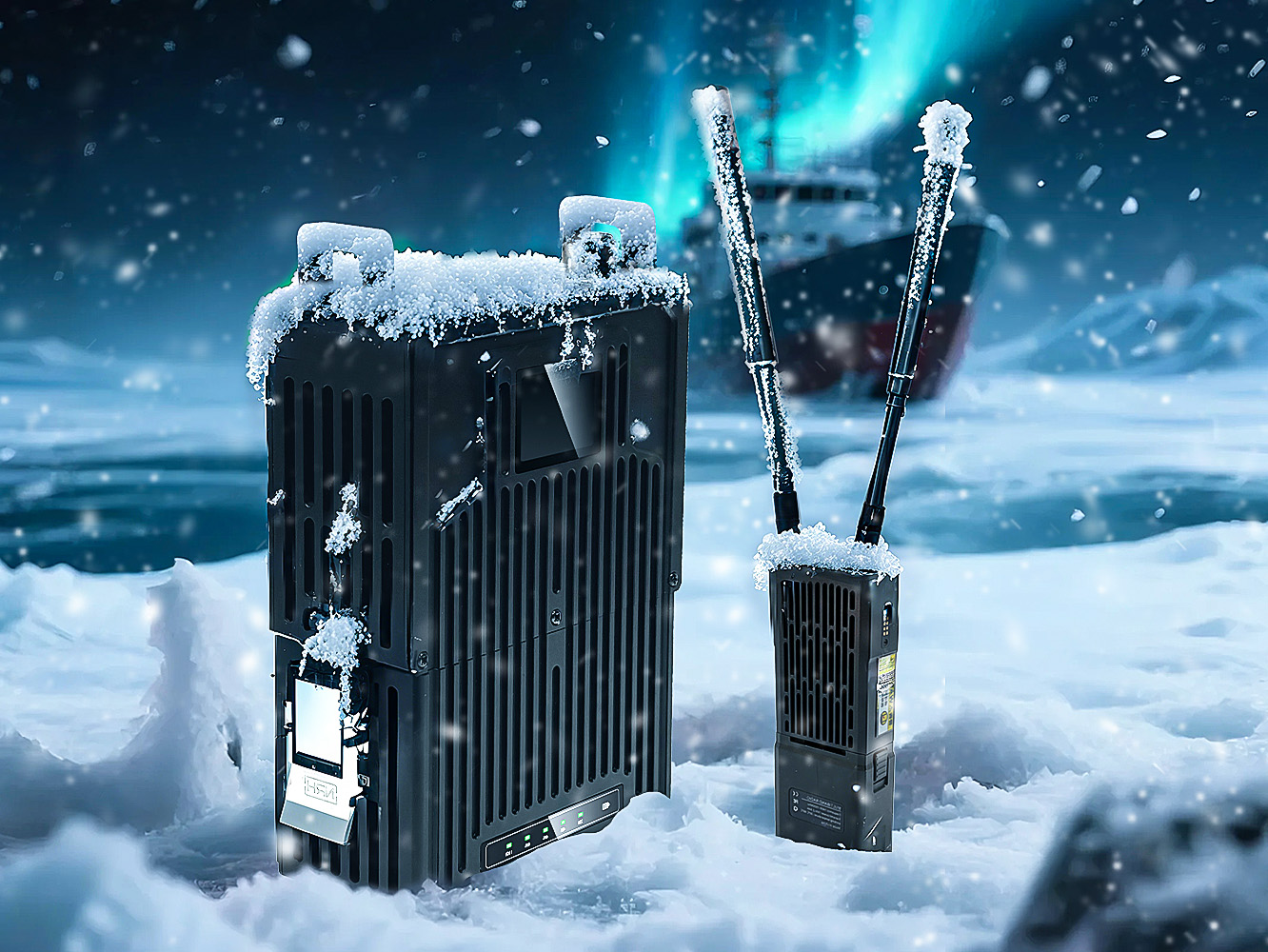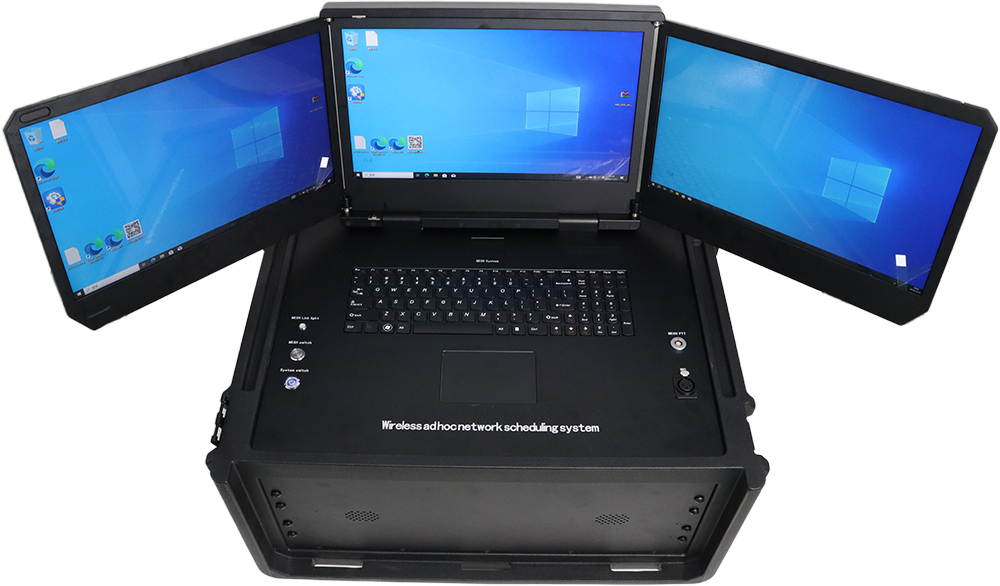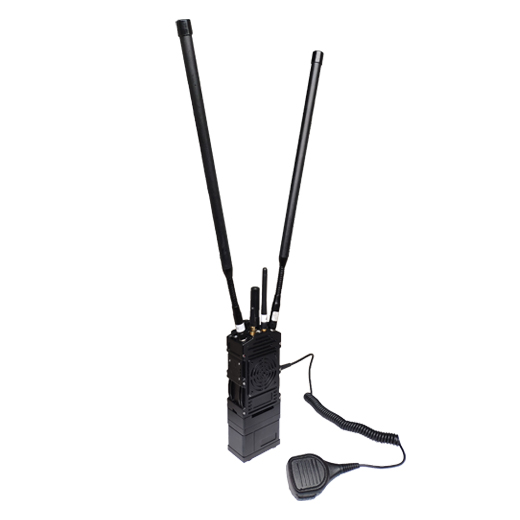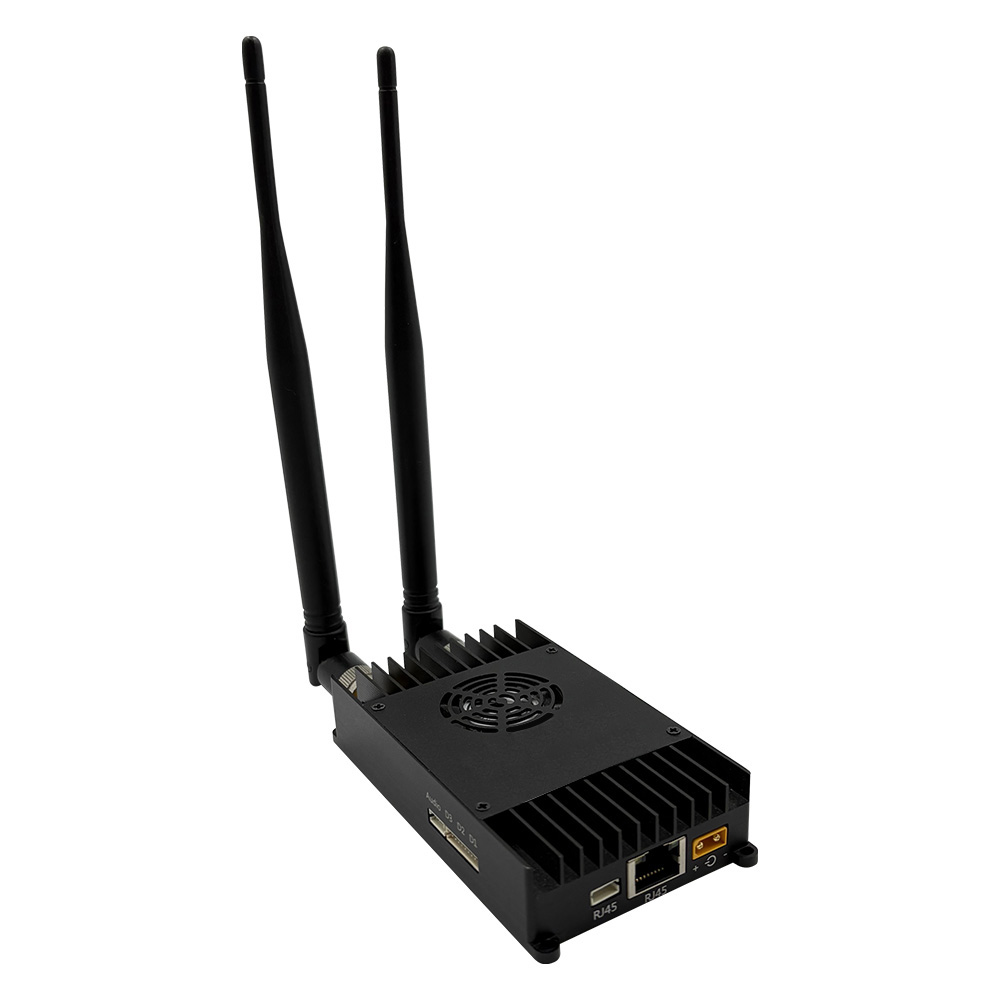


What Is an IP Mesh Radio and How Does It Work?
2025-10-24


As 5G commercial deployment deepens, enterprise communication faces a new dilemma: will 5G private networks replace existing wireless network bridge (wireless Mesh bridge) solutions? In scenarios such as campus interconnection, industrial surveillance, and long-distance transmission, how should enterprises make the optimal choice?
This article compares the two technologies from the perspectives of cost, deployment flexibility, bandwidth, and operation & maintenance complexity, and explores their applicable scenarios and complementary strategies, providing a reference for enterprise network planning.
5G private networks are based on licensed spectrum (or lightweight private networks in some regions), consisting of core network, base stations, and terminals, offering wide coverage, high concurrency, and low latency. Enterprises can choose to build their own or lease operator slice resources – essentially an “enterprise-grade operator network”.
Wireless network bridges are based on unlicensed spectrum (2.4GHz/5GHz), using a decentralized Mesh architecture to achieve point-to-point or point-to-multipoint long-distance transmission through multi-hop relaying, without relying on base stations or core networks – more like a “flexible, self-organizing LAN extension”. For example, tqwifi’s TQ5723WJ can cover 5 km in a single hop, supports MIMO 2×2 technology, and can expand from a few nodes to a full-campus Mesh network.
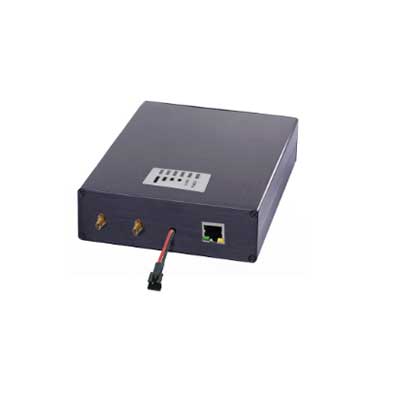
TQ5723WJ
Dimension | 5G Private Network | Wireless Network Bridge (Mesh) |
Spectrum | Licensed spectrum, low interference, stable and reliable | Unlicensed band, susceptible to Wi‑Fi/Bluetooth interference, requires private protocol protection (e.g., tqwifi iPoll technology) |
Cost | Core network + base stations + terminals, high initial investment | Only bridge/node equipment, low investment |
Deployment flexibility | Requires base station location planning, power supply, transmission – long cycle | Plug‑and‑play, PoE powered, small‑scale networking completed in hours |
Single‑hop transmission distance | Base station coverage radius 200–500 m (LOS) | 1–5 km per hop, tens of kilometers with multiple hops |
Bandwidth & latency | Theoretical high bandwidth 1–2 Gbps, latency 10–20 ms | Measured 500–600 Mbps, latency 10–50 ms |
O&M complexity | Requires professional network management team, complex fault location | Supports cloud management, intelligent self‑healing – IT staff can operate |
The comparison shows that 5G private networks excel in spectrum purity and massive concurrency, but require high investment and long deployment cycles. Wireless Mesh bridges have advantages in low cost, rapid deployment, and long-distance transmission, and their anti-interference capability can be ensured through private protocols.
High-density terminal access (e.g., thousands of AGVs and sensors in a large factory)
Real-time control requiring end-to-end low latency (<10 ms)
Sufficient budget and compliance requirements for licensed spectrum exclusivity
Long-distance backbone connections across buildings, factory areas, or roads – e.g., TQ5820AC with a 90° wide-angle antenna, covering 5 km with wide-angle coverage
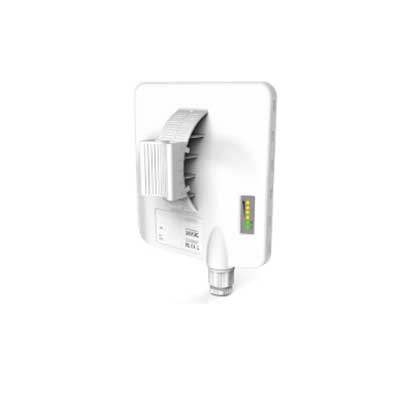
TQ5820AC
Cabling-difficult or temporary deployments in tunnels, ports, mines – e.g., TQ5818AC with built-in 15 dBi antenna, PoE powered, 3 km transmission distance, plug-and-play
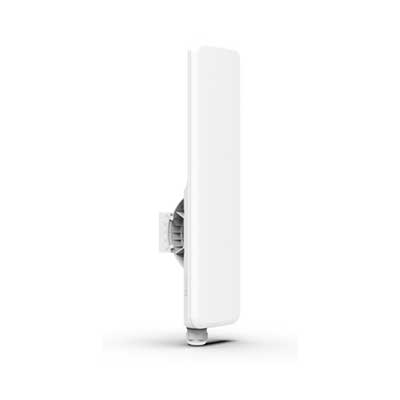
TQ 5818AC
Limited budget with a need for rapid campus network coverage
Support for mobile nodes (e.g., drones, vehicle-mounted devices) in self-organizing networks
5G private network covers the core production area, while Mesh bridges extend to edge areas or serve as backup links
Mesh bridges as backhaul links for 5G base stations, solving fiber access difficulties (e.g., TQ5723WJ long-distance bridge)
In emergency communications, hybrid networking of 5G backpack base stations and Mesh ad-hoc devices to achieve three-dimensional coverage
In the trend where 5G private networks and wireless Mesh bridges coexist, tqwifi chooses to leverage its core advantages in Mesh bridges while forming synergy with 5G:
TQ series support 3–50 km transmission
iPoll private protocol anti-interference technology ensures stable links even in strong interference environments such as welding workshops or dense WiFi areas
Fills the gap of 5G private networks in ultra-long-distance, low-cost scenarios
“5G core zone + wireless Mesh extension zone” hybrid architecture
Core factory area covered by 5G private network; peripheral warehouses, ports, and mining areas backhaul to the 5G gateway via Mesh bridges – balancing performance and investment efficiency
Intelligent wireless distance parameter autoconfiguration, load current protection, port wireless monitoring
Cloud-based remote management reduces enterprise O&M thresholds, enabling low-cost, high-efficiency operations
Overall, 5G private networks will not completely replace wireless Mesh bridges. The two technologies have their own advantages in cost, distance, deployment cycle, and O&M requirements, and will form a “layered coexistence” pattern in the future:
Core dense area: 5G private network dominates
Edge extension area: Wireless Mesh bridge dominates (tqwifi offers flexible options from 3 to 50 km)
Special environments and temporary networking: Mesh bridges flexibly fill the gaps
Enterprise network managers should choose the most economical and reliable technology combination based on actual scenarios. tqwifi will continue to provide high-value wireless Mesh bridge products and actively cooperate with 5G private network solution providers to deliver integrated communication solutions for customers.
For detailed networking design or product selection, please contact the tqwifi technical team.