

News Center
-
2025-11-25The protocols supported by WiFi5 and WiFi6 are 802.11ac and 802.11ax respectively. At present, WiFi5 has begun to upgrade to WiFi6, and many users may have already adopted WiFi6. The main four key differences between 802.11ac and 802.11ax are:... -
2025-11-23How to select the appropriate bridge in construction projects?
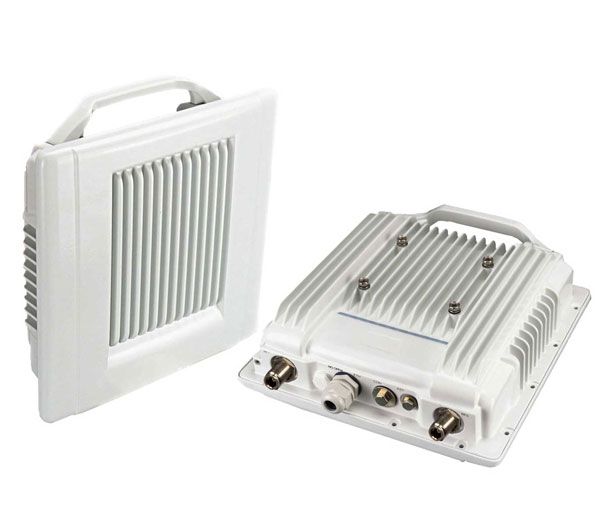
Wireless bridge is a commonly used wireless monitoring transmission device in the field of wireless monitoring. Although it is also a wireless device like wireless AP and wireless router, it is not used for establishing Wi-Fi coverage, but for wireless transmission... -
2025-11-21Wireless Mesh Self-Organizing Network Rapid Connection Technology
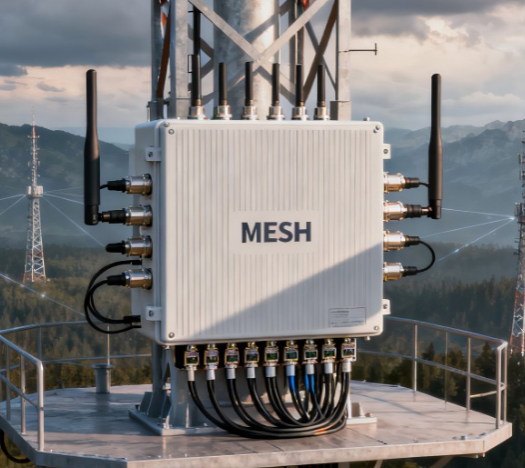
Mesh self-organizing network technology... -
2025-11-19MESH Self-Organizing Network Wireless Microwave Equipment Long-Distance Usage Precautions
MESH Self-Organizing Network Wireless Microwave Equipment Long-Distance Usage Precautions... -
2025-11-18Carrier-Grade High Bandwidth: Reshaping Industry via Operator-Level Wireless Connectivity
As global digital infrastructure accelerates—from smart cities to industrial IoT, from public safety networks to large-scale energy systems—industries are demanding communication networks that are stable, high-bandwidth, low-latency, and scalable. However, in many environments such as mountains, mining areas, ports, open fields, emergency sites, and cross-region deployments, traditional fiber installation is costly, slow, or even impractical. -
2025-11-15Economical Elevator Series — New Wireless Communication for Elevators
As smart cities, intelligent buildings, and modern property management continue to evolve, the demand for elevator monitoring, emergency intercom, advertising display updates, and elevator operation data backhaul is growing rapidly. However, traditional wired deployment often faces challenges such as long construction periods, high cost, difficult installation, and complex maintenance. -
2025-11-15Analysis of the Characteristics and Applications of MESH Ad Hoc Network Product Technology
Compared with traditional communication networks, wireless self-organizing networks have several distinctive features, such as being decentralized, self-organizing, multi-hop routing, dynamic network topology, temporariness, and limited wireless transmission bandwidth, etc. -
2025-11-105GHz High-Speed Series: Wireless Transmission Upgrade & Core Value
In an era of rapidly evolving wireless communications, the demand for long-distance, high-definition, stable, and low-latency data transmission continues to rise. From industrial monitoring and security video backhaul to UAV systems and cross-regional network connectivity, enterprises are increasingly relying on high-speed wireless links to support real-time and highly reliable operations. Among available frequency bands, 5GHz High Data Rate devices—featuring larger bandwidth, better interference resistance, and suitability for high-density environments—have become a core choice for next-generation wireless communication.