

News Center
-
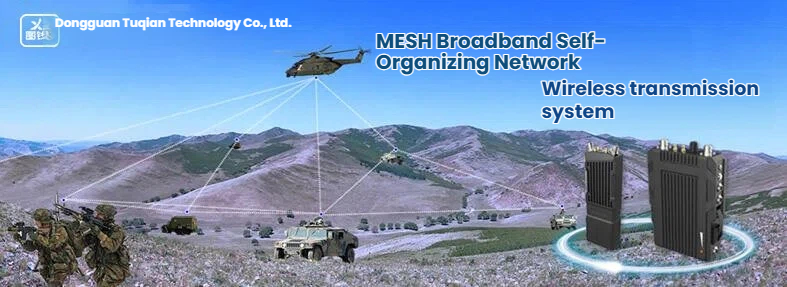
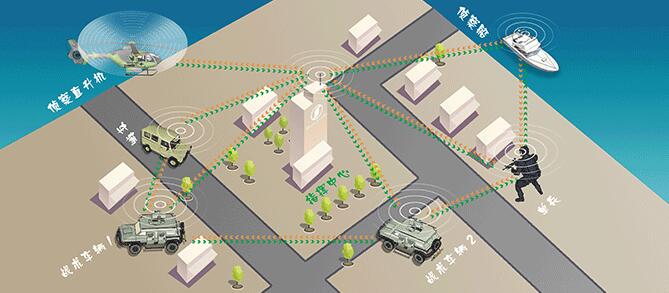
2025-09-11In the ever-evolving landscape of wireless communication, ad hoc wireless networks have emerged as a critical technology for enabling flexible, scalable, and infrastructure-free connectivity. Unlike traditional wireless networks that rely on centralized infrastructure such as base stations or routers, ad hoc networks are self-organizing systems where each device acts as both a transmitter and receiver. This decentralized approach allows devices to communicate directly with each other, forming a dynamic network on the fly.
-
2025-09-11What Are the Four Types of Wireless Data Transmission?
Wireless data transmission has become a cornerstone of modern communication, enabling the exchange of information without the need for physical cables. From personal devices like smartphones and laptops to industrial automation and global networking, wireless technologies facilitate data flow across varying distances, speeds, and environments. Understanding the different types of wireless data transmission is essential for selecting the right technology for specific applications. Broadly, wireless data transmission can be categorized into radio frequency (RF), microwave, infrared (IR), and satellite communication systems. -
2025-09-05What Is Point to Point and Point to Multipoint Wireless Network?
Wireless networks have revolutionized the way businesses, institutions, and communities connect across distances. While wired connections like fiber optics and Ethernet cables are still common, wireless solutions offer flexibility, scalability, and cost-effectiveness, especially in challenging environments. Among wireless networking technologies, point-to-point and point-to-multipoint networks are widely used for connecting remote locations. Understanding the differences between these two types and their applications is essential for designing reliable and efficient networks. -
2025-09-05What Are Point to Point Wireless Bridges Often Used For?
A point-to-point wireless bridge is a dedicated wireless link that connects two network nodes over a distance using directional antennas and radio frequency signals. This technology is particularly effective in environments where laying cables is difficult due to terrain, existing infrastructure, or budget constraints. -
2025-09-02Which Wireless Technology Is Used for Long Distance Communication?
In today’s interconnected world, wireless communication plays a critical role in transmitting data, voice, and video signals across vast distances. From rural internet access to international telecommunications, long distance wireless communication ensures connectivity where traditional wired infrastructure is impractical or impossible. -
2025-08-29What Is an Outdoor Wireless Bridge?
An outdoor wireless bridge is essentially a point-to-point (PtP) or point-to-multipoint (PtMP) wireless link designed specifically for outdoor environments. It allows organizations to extend their network over distances ranging from hundreds of meters to several kilometers, providing seamless connectivity between buildings, campuses, or remote sites. -
2025-08-29What Are the Two Types of Microwave Transmission?
Microwave transmission is one of the most vital technologies in modern communication systems. It refers to the use of high-frequency electromagnetic waves, typically ranging from 1 GHz to 300 GHz, for the purpose of transmitting data, voice, and video signals over long distances. Due to their high frequency and short wavelength, microwaves are able to carry large amounts of data at very high speeds, making them ideal for applications such as satellite communication, television broadcasting, military communications, and wireless broadband. -
2025-08-28How High-Bandwidth MESH Communication Devices Ensure Stable Wireless Video Transmission
In the age of real-time surveillance, drone-based inspections, mobile broadcasting, and unmanned missions, wireless video transmission has become essential to critical applications in both civilian and military domains. However, high-definition (HD) or even ultra-HD video streaming places intense demands on bandwidth, latency, reliability, and network resilience—especially in dynamic, mobile, or infrastructure-limited environments.